Garage Organization: Ideas, Zones and Storage Systems
Posted by MN Garage Notes Editorial Team Reviewer: MN Garage Notes Editorial Team Most recently reviewed Published In Organization
To organize a garage, empty it, sort what you own into groups, and give each group a zone: vehicles, seasonal items, tools, sports gear and hazardous products. Put walls and shelves to work first, keep the floor clear for parking, and store fuel and chemicals away from heaters, pilot lights and ignition sources, following the container labels and CPSC guidance.
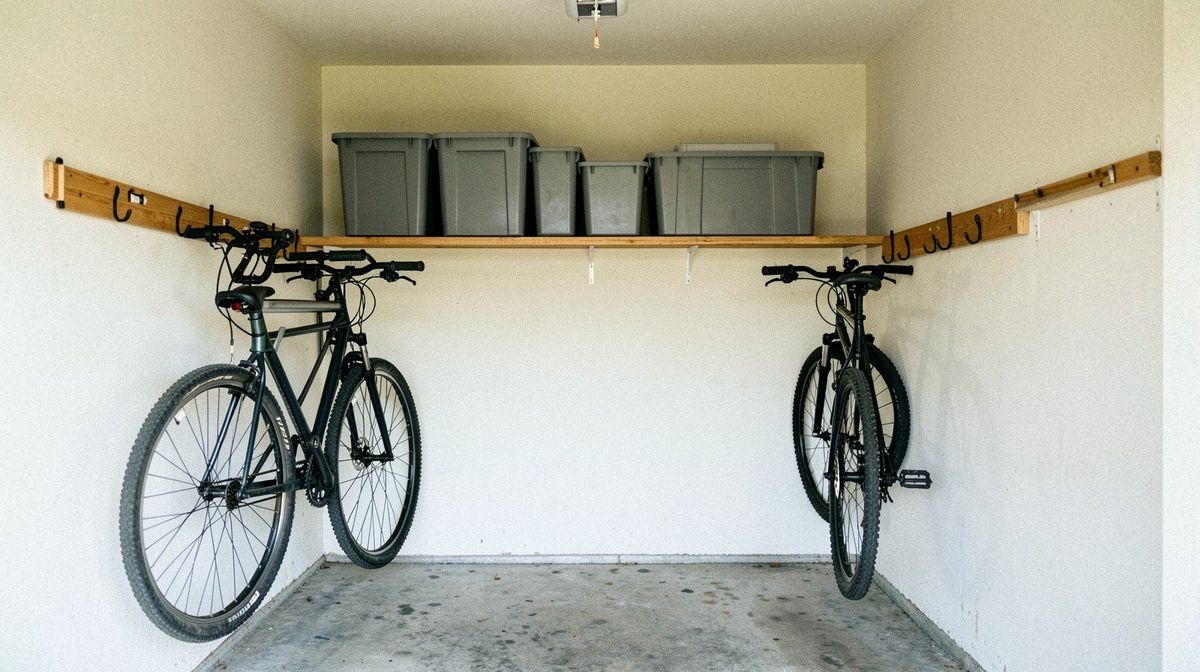
Background reading only. Treat it as no stand-in for your owner’s manual, the maker’s install sheet, your local building and fire code, or a licensed tradesperson. A garage can hold carbon monoxide, open flame, live circuits, wound springs and solvent fumes. The Garage Notes team checked each claim against the sources listed on this page; it holds no trade licence.
Garage organization starts with a plan, not a shopping trip. This pillar guide covers zones, the main wall and storage systems, safe storage of fuel and chemicals, and the winter issues a cold-climate garage adds. Detail pages follow for wall organizers, sorting and storing tools and setting up a workshop.
Plan first: purge, group, zone
Empty the garage or one section at a time, then sort every item into one of three piles: keep in the garage, keep elsewhere, and remove. Group what stays by use, such as tools, car care, lawn and garden, sports and seasonal. Count the groups; each one needs a home before you buy any storage.
Measure the garage, mark door swing, the car door-opening zone and the path to the entry. Those areas stay clear.
Zones for a cold-climate garage
A zone is a part of the garage assigned to one group of items. A common layout:
| Zone | What lives there | Placement tip |
|---|---|---|
| Vehicle | Cars, bikes | Keep clear door-opening space beside each vehicle |
| Seasonal | Snow tools, holiday boxes, patio gear | High shelves or back wall |
| Tools | Hand and power tools, workbench | Near power outlets and light |
| Sports and wet gear | Skis, boots, helmets | Near the entry, with a drip tray or mat for salt and melt |
| Hazardous products | Fuel, paint, solvents, chemicals | Locked, ventilated, away from heat |
Wall systems compared
Walls hold more than the floor can. Pick the system by what you hang. The table shows trade-offs only; load ratings come from the manufacturer’s sheet for the exact product.
| System | Good for | Watch for |
|---|---|---|
| Slatwall panels | Mixed, lighter items with movable hooks | Check panel and hook ratings and the mounting method |
| Rail systems | Heavier items such as bikes and ladders | Fasten rails into framing as the instructions say |
| Pegboard | Hand tools you want to see | Light loads; hooks can pull out |
| Wall cabinets | Chemicals, small parts, anything to lock away | Weight when full; doors that stay shut |
See garage wall organizers for mounting and layout, and the tool zone page.
Overhead and ceiling storage
Overhead racks use dead space, but they carry a risk if they are under-rated or fastened to the wrong framing. Use the rack’s rated load and the fastener type in its instructions, and ask a licensed contractor or your building department if you do not know what your joists or trusses can hold. Keep racks clear of the door track and opener, and do not hang heavy items directly over where a vehicle parks.
Floor space and parking clearance
Park first, then fill. Mark where each vehicle sits with the doors open. Keep the path to the entry clear for emergency exit. Put rolling carts and bins on the floor only where they can be moved aside. For floor options, see our garage flooring guide.
Safe storage: fuel, propane and chemicals
Keep fuel and chemicals away from every heat source in the garage, including heaters and the water heater.
- Gasoline and other fuel containers. CPSC says to store gas cans and portable fuel containers in well-ventilated, cool areas only, and out of reach of children. It says never to store gas cans inside a house or basement or near sources of ignition, such as fuel-burning appliances, open flames, pilot lights, stoves, heaters or electric mowers. Always put the cap back on after use.
- Chemicals. EPA’s household hazardous waste guide, written for transfer stations, says to store flammables separately from other chemicals, ideally in a flammable storage cabinet; the same idea applies in a home garage. Read each label for its own storage instructions.
- Propane cylinders. Follow the label on the cylinder and your fuel supplier’s instructions. This site has not opened a primary source with a rule for garage storage, so we do not state one.
- Disposal. EPA lists paints, solvents, batteries and automotive products as common household hazardous waste. Take it to a local collection program rather than a drain or the trash.
If you run a heater in the garage, read the heater safety checklist before you decide where fuel goes.
Winter-specific storage
Road salt and melt water move into a garage on boots and tires. Use mats and trays, and keep cardboard off the floor. Cold can affect products, so check each product label or manual for its storage temperature range; if it lists one, store the item indoors when the garage falls below it. We do not list products by temperature because limits vary by maker.
A weekend plan
- Morning one. Empty and sort; haul off what leaves.
- Afternoon one. Measure walls and zones; list what you need to hang or shelve.
- Morning two. Install walls, shelves or cabinets following the instructions.
- Afternoon two. Return items by zone, label them, and move hazardous items into their locked, ventilated place.
Budget by writing the list first and pricing each item from a current local source. Buy storage only for what you kept. For our standards on sourcing, see the editorial policy.
All Organization guides
- Garage Tool Organization: Cabinets, Chests and Pegboards
Organize garage tools by how often you use them: wall boards, chests and cabinets compared, plus cold-weather battery storage and locking up sharp tools.
- Garage Wall Organizers: Rails, Slatwall and Pegboard
Compare garage wall organizer types, how to read load ratings, how to mount into framing, and what cold and road salt do to metal hooks and rails.
- Garage Workshop Setup: Layout, Power and Heat
Plan a hobby garage workshop for a cold climate: zones and workflow, safe power and cords, heat and insulation, and flammable storage, with sources cited.
Frequently asked questions
How do I organize a garage?
Empty the garage, sort items into groups, remove what you no longer need, and assign each group a zone. Put daily-use items near the door you use, seasonal items up high or at the back, and hazardous products in a locked, ventilated place away from heat. Add wall rails, shelves or cabinets last, once you know what has to be stored.
What is the best garage storage system?
There is no single best system. Slatwall, rail systems, pegboard and cabinets each suit different loads and budgets, and the right one depends on what you hang or shelve. Check the manufacturer's stated load rating for every hook, shelf and rail, and mount into framing as the instructions say. The comparison table on this page covers the trade-offs.
How much weight can ceiling storage hold?
It depends on the rack and on the joists it is fastened to, so there is no general number. Use the manufacturer's rated load for the rack and for each fastener, and follow its instructions for the joist or truss type you have. If you are unsure what your ceiling framing can carry, ask a licensed contractor or your building department.
Where should I store gasoline and propane?
CPSC says to store gas cans only in well-ventilated, cool areas, out of children's reach, and never in a house or basement or near ignition sources such as fuel-burning appliances, open flames, pilot lights, stoves or heaters. Keep caps on after use. For propane cylinders, follow the cylinder label and your fuel supplier or fire department.
What should not be stored in a cold garage?
Check each product's label for its storage temperature range. Paints, adhesives, batteries and some liquids list limits on the container or in the manual, and a Minnesota-style winter can fall below them. If a label gives no range, ask the maker or keep the item indoors. Keep fuel and chemicals away from heat sources year-round.
How should I dispose of old paint and solvents?
EPA lists paints and solvents as household hazardous waste that stays hazardous when discarded. Do not pour them down a drain or put them in the trash. Use your local household hazardous waste program, and contact your state or county environmental office to learn what it accepts and when. Keep containers closed until drop-off.
Sources and further reading
Related articles
- Garage Tool Organization: Cabinets, Chests and Pegboards
Organize garage tools by how often you use them: wall boards, chests and cabinets compared, plus cold-weather battery storage and locking up sharp tools.
- Garage Wall Organizers: Rails, Slatwall and Pegboard
Compare garage wall organizer types, how to read load ratings, how to mount into framing, and what cold and road salt do to metal hooks and rails.
- Garage Workshop Setup: Layout, Power and Heat
Plan a hobby garage workshop for a cold climate: zones and workflow, safe power and cords, heat and insulation, and flammable storage, with sources cited.