Propane Garage Heaters: Safety, Venting and Sizing
Posted by MN Garage Notes Editorial Team Reviewer: MN Garage Notes Editorial Team Most recently reviewed Published In Garage heating
Propane garage heaters are either vented or unvented, and unvented portable units account for most LP gas heating deaths in CPSC data. No page can declare a propane heater safe in your garage. The manual, local fuel gas code and working carbon monoxide alarms decide, and fixed units need a licensed installer.
Belongs to the guide: Garage Heaters: Types, Sizing and Safety
Propane is one of the fuel options in our heater types, and the one that CPSC’s death data links most directly to carbon monoxide.
Background reading only. Treat it as no stand-in for your owner’s manual, the maker’s install sheet, your local building and fire code, or a licensed tradesperson. A garage can hold carbon monoxide, open flame, live circuits, wound springs and solvent fumes. The Garage Notes team checked each claim against the sources listed on this page; it holds no trade licence.
Safety block: carbon monoxide, flammable vapors, consult your manual
Propane heaters are a carbon monoxide and fire risk, and this page does not say any propane heater is safe in your garage. Consult your owner’s manual first. The CPSC’s 2021 data shows about 78 percent of the estimated 25 deaths associated with LP gas heating systems involved unvented portable propane heaters, which the CPSC says are intended as camping heaters or heaters for other temporary spaces. NFPA says all fuel-burning equipment should be vented to the outside. Read garage heater safety before shopping.
Types: unit heaters, portable forced-air, radiant; vented and unvented
Propane garage heaters are either vented (combustion gases go outside) or unvented (gases enter the room), and the difference decides the carbon monoxide risk. Some propane heaters are fixed units and some are portable units fueled from a cylinder; the manual states whether a given model is vented. The CPSC describes the unvented portable propane heaters in its death data as fueled by a propane tank and not part of an installed heating system. DOE says unvented portable combustion heaters can cause carbon monoxide poisoning, severe illness and death if not used properly, and all unvented combustion space heaters should be labeled as complying with ANSI Z21.11.2. Whether a unit may be used in a garage is stated in its manual, not on this page.
BTU ratings: input versus output
A heater’s BTU rating is usually the fuel energy going in (input); the heat delivered (output) is lower by the unit’s efficiency. Check which number the manual lists. The garage’s heat load comes from the heater sizing tool and depends on insulation, climate and temperature goal; see sealing and insulating the garage. This page gives no BTU number for a garage because none applies to every garage.
Carbon monoxide and combustion air
Burning propane releases combustion gases, and CO forms when there is not enough oxygen for complete combustion. CPSC’s 2021 CO deaths report says consumer products that burn fuels such as natural and LP gas can produce large amounts of CO, and the CDC lists CO symptoms as headache, dizziness, weakness, confusion and chest pain. The CDC warns that sleeping or intoxicated people can die from CO poisoning before they have symptoms. Install CO alarms and follow the manual’s ventilation requirements, which can be specific to each model.
Cylinder safety
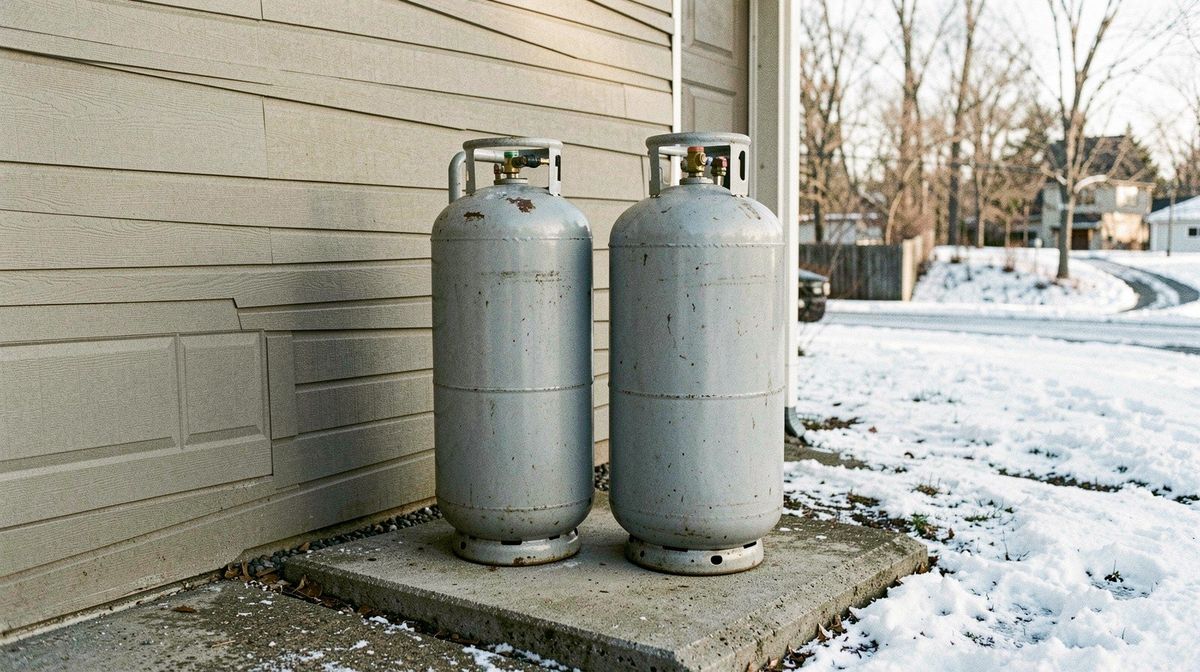
LP-gas is colorless and odorless as a liquid, evaporates into a gas, and is heavier than air, so leaks are hard to detect and pool low. NFPA’s LP-gas fact sheet says so, and explains that NFPA 58 covers storage, handling and use of LP-gas, and that NFPA 54 applies inside a home after the point of delivery. NFPA 58 also limits the quantity of propane that can be stored in buildings; this site does not quote those limits for homes, so ask your local fire marshal or propane supplier. Practical points from the sources: use only the fuel the manufacturer specifies (NFPA), turn the heater off and let it cool before refueling (CPSC), and never use a heater with a suspected leak. If you smell gas, NFPA says not to light the appliance, leave the home immediately and call the fire department or gas company.
Ventilation requirements from the manufacturer manual
Ventilation and venting rules come from the heater’s manual and local fuel gas code, not from general advice. A gas heater manual we opened requires combustion and ventilation air per the fuel gas code and warns that insufficient combustion air can cause headaches, nausea, dizziness or asphyxiation. Any propane heater manual you hold should be read in full. If it forbids use in enclosed spaces or garages, do not use it there.
Placement and clearances
Keep combustibles at least 3 feet from heating equipment, and follow the larger distance the manual gives. NFPA and USFA give the 3-foot figure. One gas unit heater manual we opened requires burners and ignition source at least 18 inches above the floor in a residential garage and protection from vehicle damage. Propane is heavier than air (NFPA); follow your manual’s mounting and placement rules.
Cost per hour: a formula
Propane cost per hour equals gallons burned per hour times your price per gallon. Gallons per hour comes from the heater’s input rating and the fuel’s energy content per gallon, both of which should be in the manual or from the supplier. This page quotes no price because no dated primary price source was opened.
Who should install it
Fixed propane heaters and any gas piping should be installed by a licensed professional. NFPA says to have a qualified professional install stationary space heating equipment according to local codes and the manufacturer’s instructions. A gas unit heater manual we opened says installation and service must be performed by a licensed professional installer, service agency or the gas supplier.
Related pages
Frequently asked questions
Is a propane heater safe in a garage?
No page can say that for your garage. Only the heater's manual and local code can allow garage use. CPSC data links unvented portable propane heaters to most of the 25 estimated LP gas heating deaths in 2021, and NFPA says fuel-burning equipment should be vented outside. If the manual does not clearly allow it, choose a vented or electric heater.
How many BTUs for a 2 car garage?
There is no single number; it depends on insulation, air leaks, climate and your target temperature. Use the garage heater size calculator to estimate the heat load, then compare it with the heater's output rating, not just its input rating. Insulating and air sealing first usually reduces the size you need.
Can I use a portable propane heater in an attached garage?
Only if the manual explicitly allows it, and the CDC says never to run a car or truck in an attached garage even with the door open. DOE warns unvented combustion heaters can cause CO poisoning. If a manual is vague, do not assume it is allowed; use a vented or electric option.
How long does a 20 lb tank last in a heater?
It depends on the heater's input rating and how long it runs, so this page gives no hours. Divide the tank's usable energy by the heater's input in BTU per hour using the manual and your supplier's figures. Do not refill or swap a tank while the heater is hot or running; the CPSC says to let it cool first.
Do propane garage heaters need venting?
Fixed propane unit heaters use a vent or sealed combustion system as the manual specifies, and NFPA says fuel-burning equipment should be vented outside. Some portable units are unvented and carry an ANSI Z21.11.2 label per DOE, but their manuals may restrict where they can be used. Read the manual and local code.
Sources and further reading
- CPSC: Carbon Monoxide Information Center (cpsc.gov)
- CPSC: Non-Fire Carbon Monoxide Deaths Associated with the Use of Consumer Products, 2021 Annual Estimates (PDF) (cpsc.gov)
- CDC: About Carbon Monoxide Poisoning (cdc.gov)
- NFPA: Heating Safety tip sheet (PDF) (nfpa.org)
- NFPA: Liquefied Petroleum Gas fact sheet (PDF) (nfpa.org)
- USFA: Heating Fire Safety (usfa.fema.gov)
- U.S. Department of Energy: Home Heating guide (PDF) (energy.gov)
- CPSC: Keep Warm and Safe This Winter (2026 release) (cpsc.gov)
- Example manufacturer manual: separated-combustion unit heater installation instructions, 508065-01 (PDF) (lennox.com)
Related articles
- Garage Heaters: Types, Sizing and Safety
Compare electric, natural gas and propane garage heaters by venting, carbon monoxide risk, clearances and who must install them, with sources cited.
- Electric Garage Heaters: 120V vs 240V, Wattage, Circuit
How electric garage heaters work, how to convert watts to BTU, what 120V and 240V mean for circuits, and the clearance and cord rules from NFPA.
- Garage Heater Safety: CO, Clearances and Fire Risk
Garage heater safety explained from CPSC, CDC, NFPA and USFA sources: carbon monoxide, clearances, flammable vapors, alarms and what never to do.
- Natural Gas Garage Heaters: Vented Unit Heaters Explained
Vented natural gas unit heaters in a garage: venting, combustion air, one manual's 18-inch burner height and why a licensed pro must install.
- How to Heat a Garage: Options, Sizing and Cost Factors
How to heat a garage in order: insulate and seal, find the heat load, pick a heater type, and follow the carbon monoxide and clearance rules.
- Infrared and Radiant Garage Heaters Explained
Infrared and radiant garage heaters explained: electric versus gas-fired types, 3-foot clearances, manual mounting rules and fire safety near vapors.