Garage Floor Paint: Is It Worth It, and How to Apply
Posted by MN Garage Notes Editorial Team Reviewer: MN Garage Notes Editorial Team Most recently reviewed Published In Garage floors
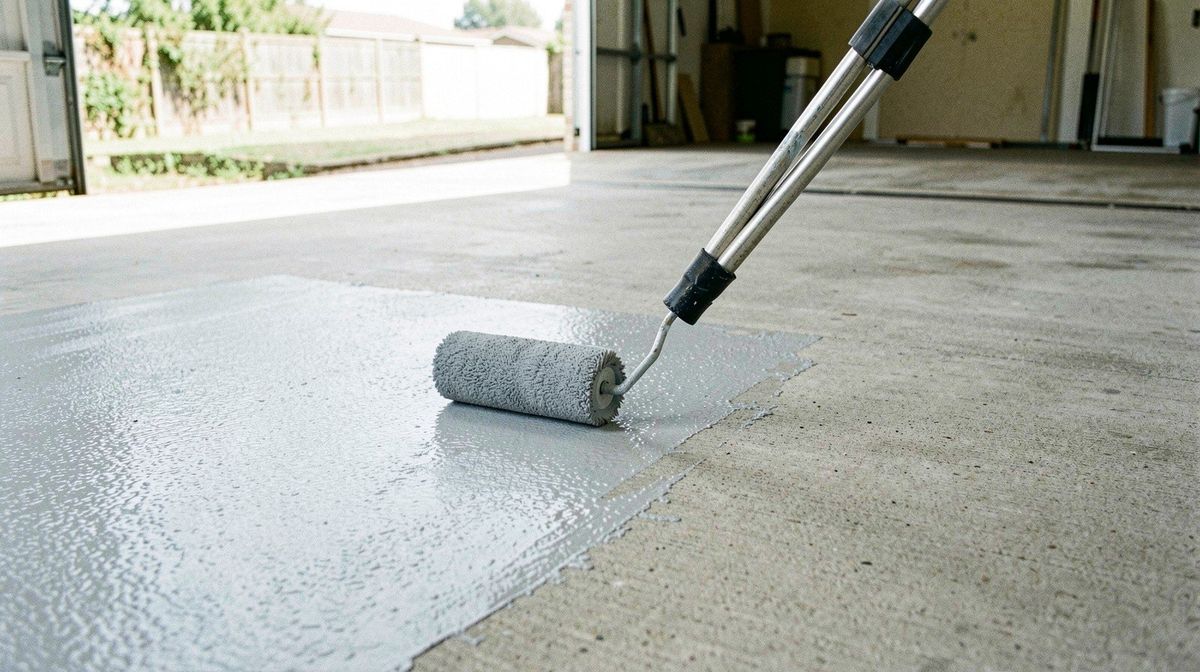
Garage floor paint is a one-part coating you roll on after cleaning and profiling concrete. It is easier and lighter-duty than a two-part epoxy system and can lift under hot tires or fail on damp slabs. Choose a paint rated for garage floors, test the slab for moisture, follow the label for conditions, and ventilate because many paints release VOCs.
Belongs to the guide: Garage Flooring Options: Coatings, Tiles and Mats
Safety note. Background reading only. Treat it as no stand-in for your owner’s manual, the maker’s install sheet, your local building and fire code, or a licensed tradesperson. A garage can hold carbon monoxide, open flame, live circuits, wound springs and solvent fumes. The Garage Notes team checked each claim against the sources listed on this page; it holds no trade licence.
Paint is the lowest-effort route to a coated garage floor, and it still depends on a dry slab and careful prep. This page supports the guide to choosing a floor; read it with the coating comparison and the page on epoxy garage floors.
Paint, epoxy and stain: what each is
Garage floor paint is a one-part coating, such as acrylic, latex or epoxy ester, that dries or cures from the can. A two-part epoxy is mixed from resin and hardener and forms a harder film. Concrete stain colors the slab without forming a thick film. Read the label to see which one you hold: a can that says “epoxy” may be a one-part paint.
Which paint types suit garages?
Look for a paint made for concrete floors and rated for vehicle traffic. Common types are acrylic or latex (water-based), one-part epoxy ester and urethane. The label states the temperature range, recoat time and surfaces. Retail pages are not reliable spec sources; use the maker’s data sheet.
Prep and moisture
Clean, degrease and dry the slab. Fill cracks per the label. Profile the surface if the label requires it. Test moisture: the plastic sheet method, ASTM D4263, is used to indicate capillary moisture in concrete before painting. If it shows moisture, address it first.
Application steps and conditions
- Read the label and, if available, the data sheet and SDS.
- Check temperature and humidity against the label.
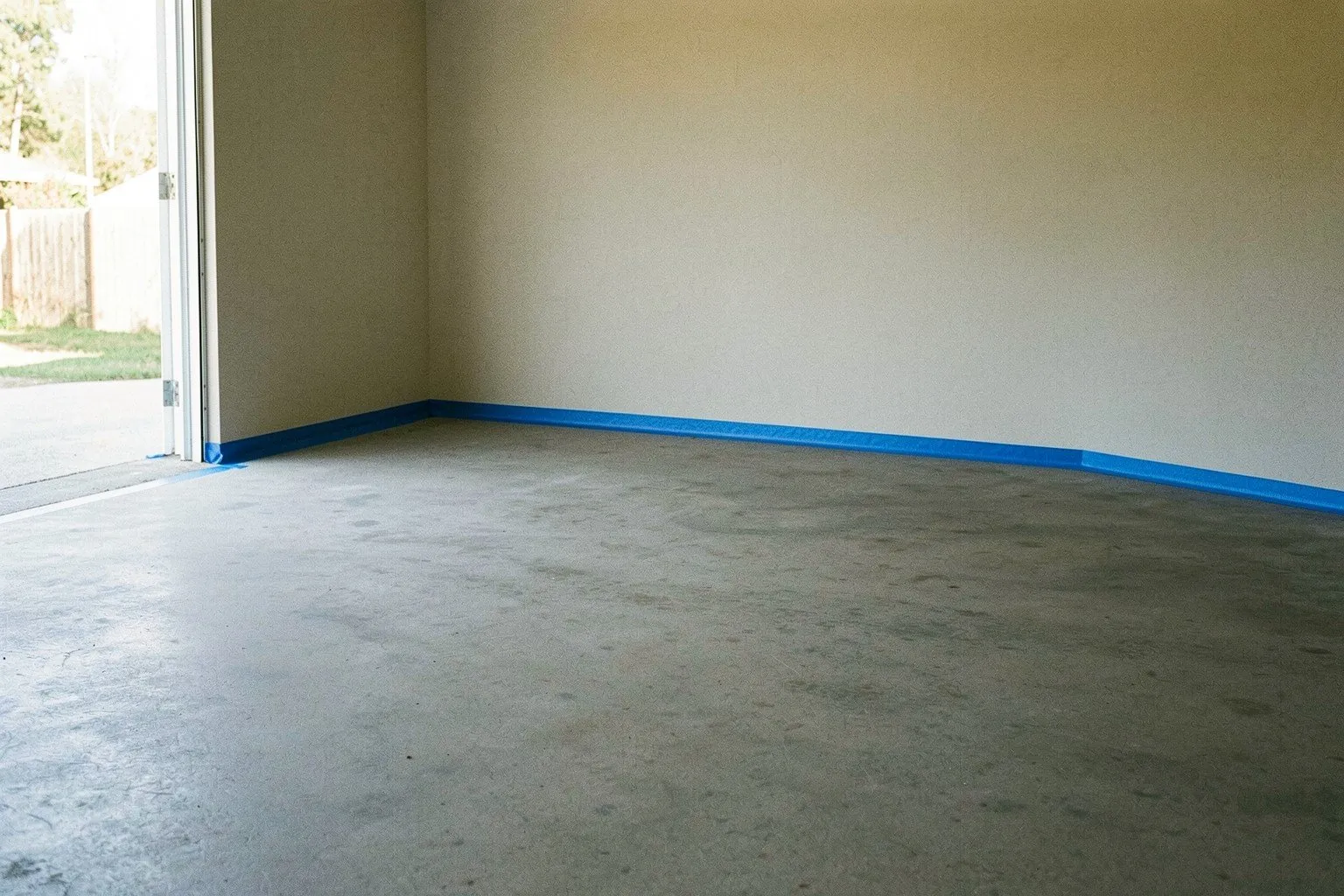
- Cut in along walls, then roll thin even coats.
- Respect recoat time between coats.
- Keep the floor clear until the label’s return-to-service time.
Do not apply in conditions the label rules out.
Hot-tire pickup and road salt
Hot tires can lift a weak coating, and salt adds moisture. Check the label for hot-tire resistance, apply thin coats rather than one thick one, and rinse salt off regularly. If hot-tire pickup is a worry, consider a coating system.
When to choose paint and when to skip it
Choose paint for a dry, sound slab, occasional use or a smaller prep effort. Skip it if the slab shows moisture, if you park heavy or hot vehicles daily, or if you want a long-lived, chemical-resistant surface; look at epoxy floors or tiles instead. Estimate paint needed with the epoxy coverage calculator, using the paint’s stated coverage.
Ventilation and cure safety
Paints are listed by EPA as common VOC sources, and EPA advises increasing ventilation and meeting or exceeding label precautions. Open the garage door, use a fan, keep the house door closed, and keep flames, pilot lights and heaters out unless the label allows them. Wear gloves and eye protection; read the SDS. Two-part epoxy paints need skin protection, since OSHA says uncured epoxy is a significant skin hazard. For leftovers, use local hazardous waste programs and never pour them down a drain. See the page on epoxy ventilation and protective gear and the garage heater overview.
Related guides
Frequently asked questions
Can you paint a garage floor?
Yes, if you use a paint made for concrete floors and prepare the slab as the label directs. Clean and degrease, repair cracks, profile the surface if the label requires it, and test for moisture. Choose a paint that states it is suitable for vehicle traffic, and follow the label's temperature and cure limits.
How long does garage floor paint last?
No lifespan is verified here. Paint is a lighter-duty coating than a two-part system, and hot tires, moisture and salt can shorten its life. Read the maker's warranty terms, prepare carefully and clean salt off regularly. Touch up chips promptly.
Do I need to etch the concrete first?
Follow the label. Many paints require cleaning and some surface profile so the paint can grip; some call for etching or grinding. Skipping the label's prep can leave the paint without a good grip. Rinse and let the floor dry fully before painting, and test for moisture.
Is paint or epoxy better for a garage floor?
Neither is always better. Paint is simpler and more forgiving to apply but lighter-duty; a two-part epoxy forms a harder film but needs more prep, better conditions and more safety precautions. Compare data sheets for hot-tire and chemical resistance and choose by use and effort.
What is hot-tire pickup?
Hot-tire pickup is when warm tires soften or lift the coating, leaving marks or peeling where you park. It is more likely with thin, poorly bonded or unsuitable coatings. Check whether the data sheet states hot-tire resistance, prepare the slab well, and ask the maker if the product suits cars parked after a drive.
Sources and further reading
- OSHA Technical Manual, Section III Chapter 1: epoxy resins and amine hardeners (osha.gov)
- EPA: Volatile Organic Compounds' Impact on Indoor Air Quality (epa.gov)
- EPA: Household Hazardous Waste (epa.gov)
- OSHA: Hazard Communication (labels and safety data sheets) (osha.gov)
- OSHA: Respiratory Protection (osha.gov)
- ASTM D4263: Indicating Moisture in Concrete by the Plastic Sheet Method (public abstract) (store.astm.org)
Related articles
- Garage Flooring Options: Coatings, Tiles and Mats
Compare garage flooring options for cold climates: coatings, tiles, mats and sealers, what concrete prep each needs, and the ventilation and safety basics.
- Epoxy Garage Floors: How They Work, Cost and Limits
How an epoxy garage floor coating system works, what prep matters, cost drivers, cold-climate limits, and the safety rules to read before you start.
- Epoxy Garage Floor Kits: What Is in the Box and What to Check
What comes in an epoxy garage floor kit, how coverage claims work, kit types, and the data sheet and safety checks to make before you buy. No brand picks.
- Epoxy Garage Floor Safety: Fumes, Ventilation and PPE
Safety rules for epoxy garage floor work: the SDS, skin and eye protection, fumes and ventilation, ignition sources, disposal and attached-garage cautions.
- Garage Floor Coatings: Epoxy, Polyaspartic and Paint
Compare garage floor coating types: epoxy, polyaspartic, polyurea and paint. What differs, what prep they share, and how to check moisture first.
- How to Epoxy a Garage Floor, Step by Step
A safety-first sequence for applying an epoxy garage floor coating: conditions, moisture test, prep, mixing, coats, cure and common mistakes.