Garage Door Insulation: Options, R-Value and Cost
Posted by MN Garage Notes Editorial Team Reviewer: MN Garage Notes Editorial Team Most recently reviewed Published In Insulation
You can insulate a garage door with a kit, cut rigid foam, reflective foil or a new insulated door. R-value describes one section and U-factor the whole tested door, so compare tested U-factors. Sealing gaps matters as much as panels, and added weight means you must recheck balance. Never work on springs or cables yourself.
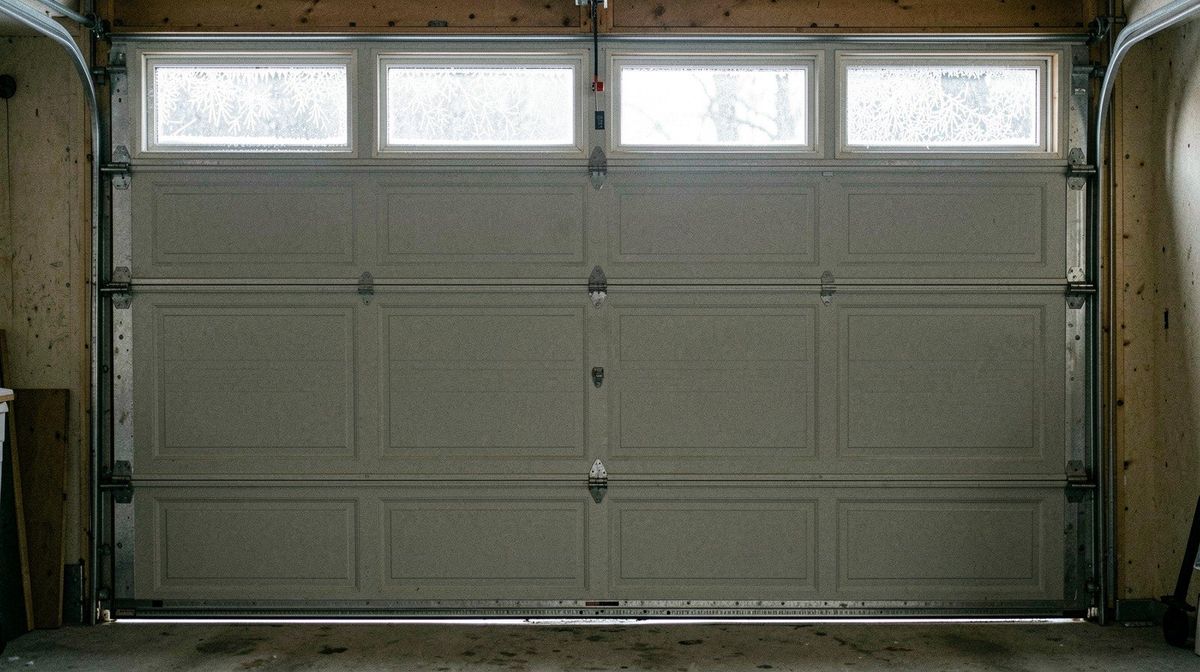
This is the decision page for our insulation overview as it applies to the overhead door; the install steps are on a separate page.
Background reading only. Treat it as no stand-in for your owner’s manual, the maker’s install sheet, your local building and fire code, or a licensed tradesperson. A garage can hold carbon monoxide, open flame, live circuits, wound springs and solvent fumes. The Garage Notes team checked each claim against the sources listed on this page; it holds no trade licence.
Safety first: weight, balance and springs
Adding insulation to a garage door adds weight, and a door that is out of balance can strain the opener and defeat entrapment protection. DASMA says safe operation of the door, opener and entrapment protection depends on a balanced door, an effectively working opener and effectively working entrapment protection. Never adjust, loosen or replace springs, cables or brackets yourself; DASMA says those repairs and adjustments must be done by a trained door systems technician. Consult the door’s and opener’s manuals before you start. See garage door springs for the stop-and-hire list.
Does insulating a garage door help? What to expect
Insulating a garage door can reduce heat loss through the door, but the result depends on the whole door, its seals and the rest of the garage. DASMA explains that a door’s thermal performance is affected by section joints, stiles, thermal breaks, air spaces and weather seals, and that some construction elements create a thermal shortcut around the insulation. The Department of Energy’s Building America guide lists the walls between living space and an attached garage, and floors above an unconditioned garage, among the places air leaks between a home and unconditioned space. No source we opened gives a general temperature gain for a given kit, so this page makes no such promise. Consider a heater only after leaks are addressed; see garage heater types.
Four ways to insulate
You can add panels or a kit to an existing door, add cut rigid foam, add reflective foil, or replace the door with a factory-insulated one. The table compares them on what to check, using DOE’s published R-values per inch for the materials.
| Method | Typical material and R per inch (DOE) | What to check | Related page |
|---|---|---|---|
| Panel or batt kit on existing door | Fiberglass batt R-2.9 to R-3.8 per inch (standard density); rigid foam boards below | Weight added, fit in section recesses, whether the kit is for your door type | Insulation kits |
| Cut rigid foam board | Expanded polystyrene R-3 to R-4; extruded polystyrene R-5.0; polyisocyanurate R-5.6 to R-8 (up to R-8.7 foil-faced) per inch | Foam needs a fire barrier per DOE table; EPS melts at 200 degrees F, XPS at 300 degrees F | How to insulate |
| Reflective foil | DOE’s table describes reflective insulation for vented attics in hot climates and says radiant barriers are not recommended for cold climates | Ask for the tested or stated R-value and how it was measured | Door insulation kits |
| New insulated door | Polyurethane foam R-7 to R-9 per inch as a material; door ratings use a tested U-factor | Look for a tested whole-door U-factor, seals and thermal breaks | Insulated garage doors |
R-value versus U-factor: why R-value alone misleads
R-value describes one door section’s insulation, and U-factor describes the whole tested door, so the two numbers cannot be compared. DASMA Technical Data Sheet 163 says R-value is a calculation for the door section only, that it should not be used for garage door assemblies, that U-factor comes from testing the entire installed assembly under ANSI/DASMA 105, and that the two are not reciprocals. DASMA says purchasers should be aware that a tested U-factor is the most reliable rating for comparing doors, and that recognized building codes deal with garage door thermal performance in terms of U-factor. Lower U-factor means better insulation; higher R-value means better insulation. Adding R-value to a section does not fix gaps at the joints and edges.
Air sealing: bottom, side and top seals
Sealing the gaps around the door often matters as much as the panels. DOE’s Building America guide says money spent on insulation can be wasted if holes and gaps are not sealed first, and that air moving through insulation “robs” it of R-value. ENERGY STAR describes a paper test for doors: shut the door on a sheet of paper, and if you can pull the paper out without tearing it, you have an air leak. DASMA notes weather seals resist heat flow. Check the bottom seal, the side seals and the top seal for gaps and wear.
Kit versus new insulated door
A kit is a lower-cost partial fix, and a new insulated door is a whole-door solution, but this page quotes no prices. Costs vary by market and no dated primary price source was opened. Decide on factors: door age and condition, whether the existing door has dents or a failing seal, how often you heat the garage, the tested U-factor of the replacement door, and installation cost for springs and hardware, which is a trained-technician job. See factory-insulated doors and garage insulation cost factors.
Special cases: windows, roll-up doors and torsion springs
Doors with windows, roll-up doors and torsion-spring doors have special limits. Window panels are glass or plastic, not foam; check the kit’s manual for how it handles them. Roll-up and one-piece doors have different construction from sectional doors; follow the door maker’s manual. DASMA’s checklist lists broken springs as a reason not to operate the door until a trained technician replaces them. Do not insulate or work around a door with a broken spring.
Safety: balance, weight and opener limits after adding insulation
After adding insulation, test balance with the opener disconnected using the manual release. DASMA’s opener guide says the door should move freely and balance partway open, about 3 to 4 feet above the floor. If it does not stay there or the opener strains, stop and call a trained door systems technician. Also confirm the photo eye height is no higher than 6 inches above the floor, and test auto-reverse per the opener manual. Never disable the photo eyes or auto-reverse.
Condensation and moisture in a cold garage
Cold garages can see condensation where warm, humid air meets cold surfaces. The sources opened do not give a door-specific moisture rule, so follow the kit or door manual. If you add a heater, remember that the heater’s manual and carbon monoxide rules come first; see heater fire and CO risks.
Step-by-step overview
- Check the door’s balance and condition; stop if a spring or cable is damaged.
- Choose a method from the table, with the manual for each.
- Seal gaps at the bottom, sides and top.
- Install per how to insulate a garage door.
- Retest balance, photo eyes and auto-reverse.
Related pages
| Method | Material and R per inch (DOE) | What to check |
|---|---|---|
| Panel or batt kit | Fiberglass batt R-2.9 to R-3.8 per inch | Added weight, fit, door type |
| Cut rigid foam | EPS R-3 to R-4; XPS R-5.0; polyiso R-5.6 to R-8 per inch | Fire barrier per DOE; EPS melts at 200 F |
| Reflective foil | DOE: radiant barriers not recommended for cold climates (attic context) | Stated R-value and test method |
| New insulated door | Polyurethane foam R-7 to R-9 per inch; doors rated by tested U-factor | Tested U-factor, seals, thermal breaks |
For an older door in good condition, a kit or foam with good seals is the lower-effort path; for a damaged door or a heated shop, compare the tested U-factor of a new insulated door. Recheck balance after any added weight.
All Insulation guides
- Garage Ceiling Insulation: Materials and Cold-Climate Tips
How to insulate a garage ceiling in a cold climate: target R-values from ENERGY STAR, air sealing first, light and flue clearances, and when to call a pro.
- Garage Door Insulation Kits: Types and What to Check
What is in a garage door insulation kit, how foam, fiberglass and reflective materials compare by R-value and fire safety, and what to check before buying.
- Garage Insulation Cost: Material and Labor Factors
What decides garage insulation cost: area, R-value, material and access. Includes a fill-in worksheet, since we print no prices without a dated source.
- Garage Insulation: What to Insulate and Which R-Value
Garage insulation explained: where heat escapes, ENERGY STAR and DOE R-values by climate zone, insulation types compared, and attached-garage safety.
- How to Insulate a Garage Door, Step by Step
Step-by-step overview of insulating a garage door: balance test, panels, sealing edges and rechecking the opener, with safety limits and no spring work.
- How to Insulate a Garage: Walls, Ceiling and Door
Step-by-step order of work to insulate a garage: seal air leaks, then walls, ceiling and door, with safety, fire-barrier and heater-clearance notes.
- Insulated Garage Doors: Are They Worth It?
How insulated garage doors are built, why DASMA says U-factor beats R-value for comparing doors, and what to check on a spec sheet before you buy.
Frequently asked questions
Does insulating a garage door make a difference?
It can reduce heat loss through the door, but the sources we opened give no general temperature gain, so this site makes no promise. DASMA says joints, stiles, thermal breaks and weather seals affect a door's thermal performance. Seal gaps, then insulate, and judge results by how well the garage holds the temperature you set.
What R-value do I need for a garage door?
No single R-value is required for every door. DASMA says R-value is calculated for a section only and U-factor is the more reliable rating for a whole door. For comparison only, ENERGY STAR recommends R60 for an uninsulated attic floor in zones 6 and 7, but doors are rated differently. Ask for a tested U-factor when buying a door.
Is a garage door insulation kit worth it?
It depends on the door, the kit and how you use the garage. A kit adds weight, so you must recheck balance, and a kit does not fix leaky seals. This page quotes no cost figures because no dated primary price source was opened. Compare against the factors in the insulated door page.
Will insulation make my door too heavy for the opener?
It can add load. DASMA says operation of the door, opener and entrapment protection depends on a balanced door, an effectively working opener and effectively working entrapment protection. After installing, test balance by hand, and if the door does not stay partway open or the opener strains, stop and call a trained technician.
Can I insulate a door with windows?
You can usually insulate the solid panels, but window sections are not covered by foam panels. Check the kit's manual for how it treats window panels and for any limits on door types. A tested U-factor from the door maker shows the whole door's performance including glass.
Can I use spray foam on a garage door?
We do not recommend DIY spray foam on a door. DOE's guide says polyurethane spray foam must be installed by trained professionals following manufacturer recommendations and local building and fire codes, and that it emits toxic gases during application. The sources we opened do not cover foam on doors, so ask the door manufacturer.
Sources and further reading
- DASMA Technical Data Sheet 163: U-factor and R-value for Residential and Commercial Garage Doors (PDF) (dasma.com)
- DASMA Technical Data Sheet 167: Sectional Garage Door and Electric Operator Checklist (PDF) (dasma.com)
- DASMA: Automatic Garage Door Opener Safety and Maintenance Guide (PDF) (dasma.com)
- DASMA: Garage Door Safety Tips (dasma.com)
- U.S. DOE Building America: Energy Renovations, Insulation (PDF, 2012) (energy.gov)
- ENERGY STAR: DIY Checks and Inspections (energystar.gov)
- ENERGY STAR: Recommended Home Insulation R-Values (energystar.gov)
- U.S. DOE: Energy-Efficient Home Improvement Credit, Insulation and Air-Sealing Essentials (energy.gov)
Related articles
- Garage Ceiling Insulation: Materials and Cold-Climate Tips
How to insulate a garage ceiling in a cold climate: target R-values from ENERGY STAR, air sealing first, light and flue clearances, and when to call a pro.
- Garage Door Insulation Kits: Types and What to Check
What is in a garage door insulation kit, how foam, fiberglass and reflective materials compare by R-value and fire safety, and what to check before buying.
- Garage Insulation Cost: Material and Labor Factors
What decides garage insulation cost: area, R-value, material and access. Includes a fill-in worksheet, since we print no prices without a dated source.
- How to Insulate a Garage: Walls, Ceiling and Door
Step-by-step order of work to insulate a garage: seal air leaks, then walls, ceiling and door, with safety, fire-barrier and heater-clearance notes.
- How to Insulate a Garage Door, Step by Step
Step-by-step overview of insulating a garage door: balance test, panels, sealing edges and rechecking the opener, with safety limits and no spring work.
- Insulated Garage Doors: Are They Worth It?
How insulated garage doors are built, why DASMA says U-factor beats R-value for comparing doors, and what to check on a spec sheet before you buy.