Garage Floor Coatings: Epoxy, Polyaspartic and Paint
Posted by MN Garage Notes Editorial Team Reviewer: MN Garage Notes Editorial Team Most recently reviewed Published In Garage floors
Garage floor coatings are chemistries, not brands: epoxy, polyaspartic and polyurea, and one-part paints. They differ in cure behavior, flexibility, UV stability and how much prep and ventilation they demand. Moisture and prep matter as much as the chemistry, and the data sheet sets the limits. Choose from the data sheet, test the slab first, and read the safety data sheet before opening a container.
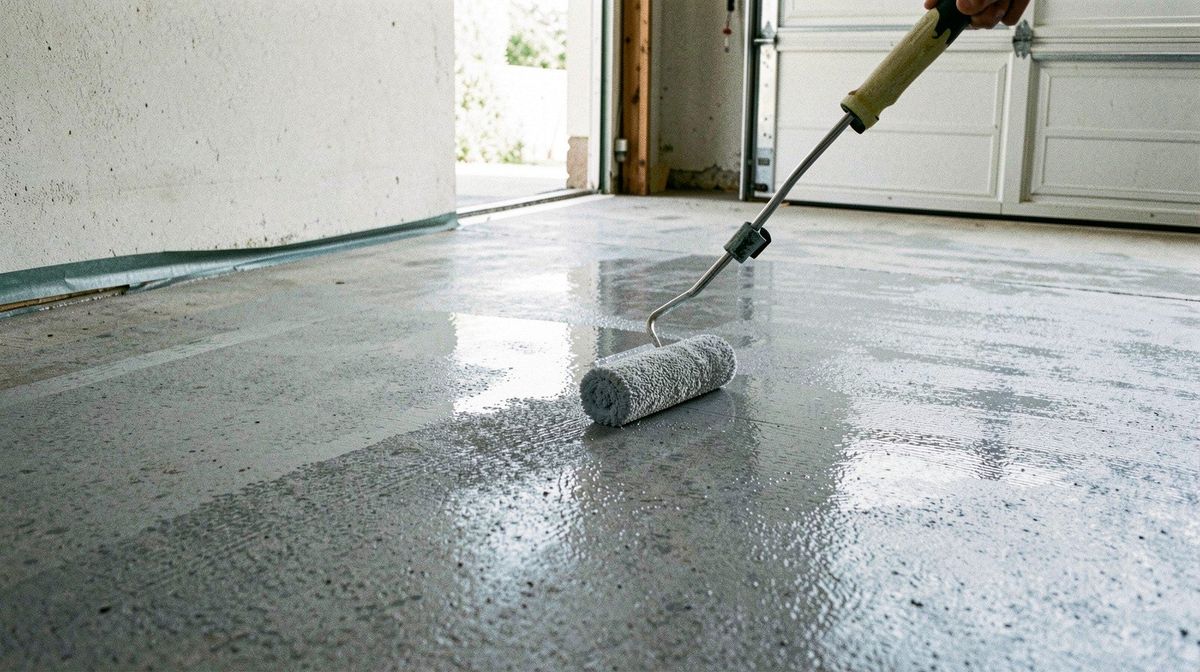
Belongs to the guide: Garage Flooring Options: Coatings, Tiles and Mats
Safety note. Background reading only. Treat it as no stand-in for your owner’s manual, the maker’s install sheet, your local building and fire code, or a licensed tradesperson. A garage can hold carbon monoxide, open flame, live circuits, wound springs and solvent fumes. The Garage Notes team checked each claim against the sources listed on this page; it holds no trade licence.
Garage floor coatings are chemicals applied to concrete, so the first question is the chemistry and the second is the prep. This page supports the garage flooring options guide and compares epoxy, polyaspartic and paint at category level. The detail pages are how epoxy coatings work and painting a garage floor.
What are the coating chemistries?
The main chemistries are epoxy, polyaspartic, polyurea, and one-part acrylic or latex paints. A two-part coating is mixed from a resin and a hardener just before use, and starts curing; a one-part paint dries from the can.
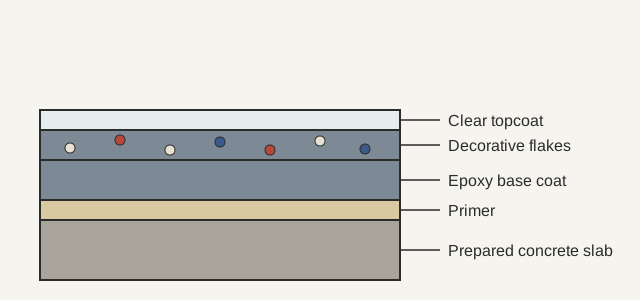
Epoxy is a two-part resin. Polyaspartic and polyurea are fast-curing coatings often used as topcoats. Paint is one-part and the lightest-duty option. See the table above.
What prep do all coatings share?
All coatings need clean, dry, profiled concrete. That means removing oil and old coatings, repairing cracks, preparing the surface as the data sheet directs, and testing moisture. Skipping any of these risks a coating that does not bond; the data sheet lists the prep it requires. The detailed sequence is in the step-by-step epoxy guide.
Moisture and sealers: the main cause of peeling
Moisture in the slab can hurt coating performance: ASTM’s public abstract says capillary moisture in concrete may be detrimental to certain coating systems. The ASTM D4263 plastic sheet method is used to indicate the presence of capillary moisture in concrete. It indicates moisture rather than measuring it. If it shows moisture, follow the coating maker’s guidance on moisture-tolerant primers or sealers, or hold off. Do not coat over a wet slab.
Hot-tire pickup and road salt
Hot tires can soften or lift weak coatings, and road salt brings moisture and chlorides. No source we opened quantifies resistance, so check each data sheet for stated hot-tire and chemical resistance and ask the maker if it is missing. Salt-heavy climates should rinse the floor regularly.
Application conditions and ventilation
Temperature, humidity and ventilation are on the data sheet. EPA advises increasing ventilation when using products that emit VOCs. OSHA’s Technical Manual says skin exposure to uncured epoxy is the main concern and that some amine hardeners can irritate the nose, throat and lungs. Use gloves and eye protection, ventilate, and follow the safety data sheet for respiratory protection. Keep ignition sources, including pilot lights and heaters, out of the space unless the label allows them. See epoxy garage floor safety.
Which coating for which garage?
- Dry, sound slab, car storage: epoxy base with a topcoat per the data sheet.
- Occasional use, small budget of time: one-part paint; see floor paint.
- Damp slab: fix the moisture first or choose tiles or mats.
- Heated garage: see garage heaters; ask the maker about compatibility.
Estimate material with the epoxy coverage calculator and check kit contents in what a DIY epoxy kit includes.
Related guides
| Coating | Typical role | Shared prep | Watch for |
|---|---|---|---|
| Epoxy | Base coat; strong bond to concrete | Clean, degrease, profile the slab, moisture test | UV exposure (check the data sheet), ventilation, skin sensitization |
| Polyaspartic / polyurea | Often topcoat or fast-cure system | Same as epoxy; per data sheet | Short working time, ventilation and PPE |
| Acrylic or latex paint | One-part water-based paint | Clean, degrease, etch per label | Hot-tire pickup, lower durability |
| Epoxy ester or urethane paint | One-part solvent paint | Clean and profile per label | Fumes, ignition sources |
Choose epoxy as a base when the slab is sound and dry and you can manage prep and ventilation; consider a topcoat for UV or abrasion per the data sheet; choose a one-part paint for lighter use and a smaller budget of time. Whatever you choose, the data sheet beats general advice.
Frequently asked questions
What is the most durable garage floor coating?
No source we opened ranks coatings by durability, so we do not name one. Durability depends on slab prep, moisture, film thickness and the system, not just chemistry. Compare the data sheets for abrasion, chemical and temperature limits, and choose a system designed for vehicle traffic.
Epoxy or polyaspartic?
They differ in cure behavior, flexibility and working time, and they are often combined: epoxy as a base, a polyaspartic or other topcoat above. Polyaspartic systems may cure faster and need faster work. Pick from the data sheets and how much time and ventilation you have, not from a general ranking.
How long do garage floor coatings last?
No lifespan is verified here, because it depends on prep, moisture, use and the product. Read the maker's stated warranty terms and conditions, including what voids them. Keep the slab dry, wash off winter salt regularly, and repair chips early so water cannot get beneath the film.
Can I coat a garage floor in winter?
Only if the data sheet allows it. Coatings list minimum and maximum air and slab temperatures and humidity, and cold slabs can condense moisture. Do not use a fuel-burning heater to warm the space unless the label allows it, because of fire and fume hazards. Waiting for a warm, dry window is often safer.
Why does my garage floor coating peel?
Common suspects are moisture in the slab, poor cleaning or profiling, or applying outside the data sheet's conditions, and hot tires may also affect some coatings. Test moisture before coating, follow prep exactly, and ask the maker about hot-tire resistance.
Sources and further reading
- OSHA Technical Manual, Section III Chapter 1: epoxy resins and amine hardeners (osha.gov)
- EPA: Volatile Organic Compounds' Impact on Indoor Air Quality (epa.gov)
- EPA: Household Hazardous Waste (epa.gov)
- OSHA: Hazard Communication (labels and safety data sheets) (osha.gov)
- OSHA: Respiratory Protection (osha.gov)
- ASTM D4263: Indicating Moisture in Concrete by the Plastic Sheet Method (public abstract) (store.astm.org)
Related articles
- Garage Flooring Options: Coatings, Tiles and Mats
Compare garage flooring options for cold climates: coatings, tiles, mats and sealers, what concrete prep each needs, and the ventilation and safety basics.
- Epoxy Garage Floors: How They Work, Cost and Limits
How an epoxy garage floor coating system works, what prep matters, cost drivers, cold-climate limits, and the safety rules to read before you start.
- Epoxy Garage Floor Kits: What Is in the Box and What to Check
What comes in an epoxy garage floor kit, how coverage claims work, kit types, and the data sheet and safety checks to make before you buy. No brand picks.
- Epoxy Garage Floor Safety: Fumes, Ventilation and PPE
Safety rules for epoxy garage floor work: the SDS, skin and eye protection, fumes and ventilation, ignition sources, disposal and attached-garage cautions.
- Garage Floor Paint: Is It Worth It, and How to Apply
When garage floor paint makes sense compared with epoxy, what types exist, how prep and moisture decide results, and the ventilation and safety basics.
- How to Epoxy a Garage Floor, Step by Step
A safety-first sequence for applying an epoxy garage floor coating: conditions, moisture test, prep, mixing, coats, cure and common mistakes.