How to Insulate a Garage Door, Step by Step
Posted by MN Garage Notes Editorial Team Reviewer: MN Garage Notes Editorial Team Most recently reviewed Published In Insulation
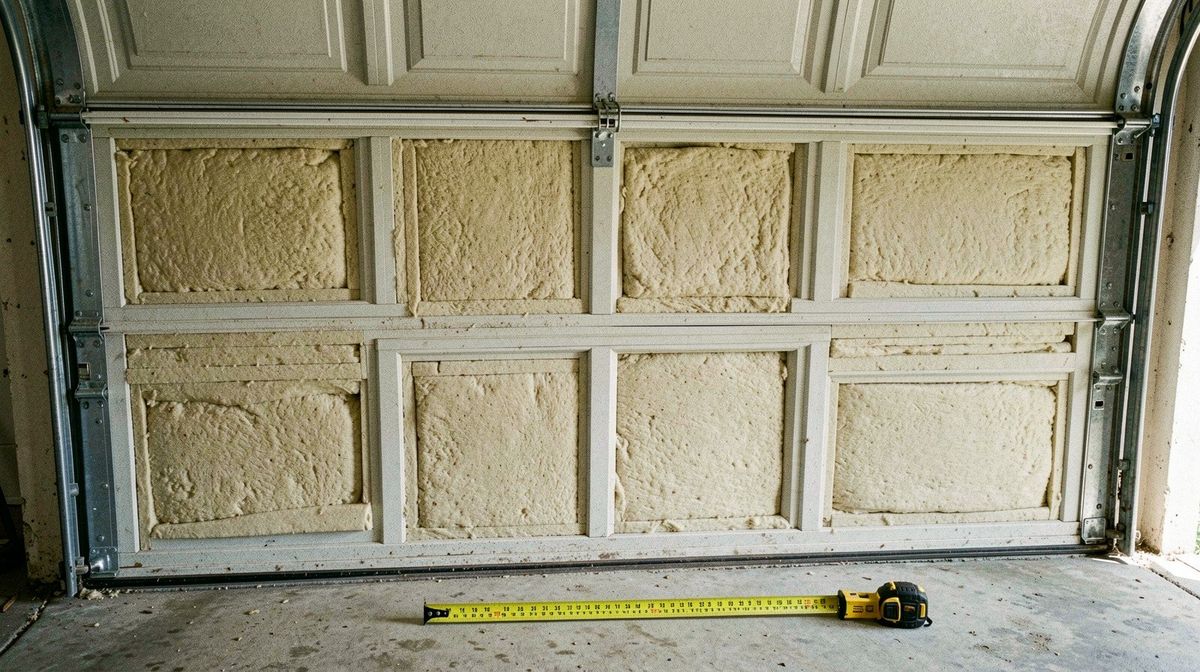
To insulate a garage door, test its balance, choose a kit or foam per the maker's manual, measure and fit panels without touching springs or cables, seal the edges and bottom, then retest balance, photo eyes and auto-reverse. Spring and cable work is for a trained technician. Follow the kit and door manuals.
Belongs to the guide: Garage Door Insulation: Options, R-Value and Cost
This is the install page for the methods compared in our door insulation options; read that page first to choose a method.
Background reading only. Treat it as no stand-in for your owner’s manual, the maker’s install sheet, your local building and fire code, or a licensed tradesperson. A garage can hold carbon monoxide, open flame, live circuits, wound springs and solvent fumes. The Garage Notes team checked each claim against the sources listed on this page; it holds no trade licence.
Stop first: balance, springs and what not to touch
Adding insulation to a garage door adds weight, and a door that is out of balance can strain the opener and defeat entrapment protection. DASMA says safe operation of the door, opener and entrapment protection depends on a balanced door, an effectively working opener and effectively working entrapment protection. Never adjust, loosen or replace springs, cables or brackets yourself; DASMA says those repairs and adjustments must be done by a trained door systems technician. Consult the door’s and opener’s manuals before you start. Do not drill into or fasten through spring, cable or bracket hardware. If a spring is broken, DASMA says do not operate the door until it is replaced.
Before you start: balance test, sections, window panels, tools
Check the door’s balance and condition before you add anything. DASMA’s guide says to open and close the door manually using the handles or suitable gripping points, that it should move freely and balance partially open 3 to 4 feet above the floor, and to contact a trained door systems technician if you see signs of improper operation. Disconnect the opener with its manual release first, per the opener’s manual. Then:
- Read the kit’s or foam’s instructions for your door type; they decide the fasteners and method.
- Measure section recesses, note window panels, and clean surfaces.
- Wear gloves, goggles and a dust mask for fiberglass, per the DOE guide.
- Keep hands out of section joints and away from track and spring hardware.
Measure and cut panels
Measure each recess and cut the material to fit, following the kit manual. For rigid foam, DOE’s table lists expanded polystyrene at R-3 to R-4 per inch, extruded polystyrene at R-5.0 and polyisocyanurate at R-5.6 to R-8 per inch. Foam boards are cut with the tool the maker names. DOE says rigid foams require a fire barrier and that expanded polystyrene melts at 200 degrees F and extruded polystyrene at 300 degrees F, so keep them away from heaters and hot fixtures.
Fit and secure panels without drilling the door skin
Use the retainers, tape or adhesive the kit’s manual specifies; do not drill the door skin unless the door’s manufacturer allows it. The sources opened do not cover door-skin fastening, so follow the door and kit manuals. Keep panels clear of rollers, hinges, track and cables.
Seal edges and the bottom seal
Seal the gaps after the panels are in, because DOE says insulation is “robbed” of R-value when air flows through it. Check the bottom seal, side seals and top seal. ENERGY STAR’s paper test for doors: shut the door on a sheet of paper, and if you can pull it out without tearing it, you have an air leak. DOE names weatherstripping for moving parts such as doors and caulk for stationary gaps.
Check balance and the opener after you finish
Retest balance, photo eyes and auto-reverse after the job. DASMA says the door should stay partially open 3 to 4 feet above the floor, that the photo eye should be no higher than 6 inches from the floor, and that the reversal check lays a 2x4 flat in the door’s path, and the door should stop on contact and reverse direction. Follow the opener manual for the test. Do not disable the photo eyes or auto-reverse. If balance is off, stop and call a trained door systems technician.
Maintenance and when to re-check
Re-check seals each season, and re-check balance after anything that adds weight. DASMA says springs wear out and that when they break injury can result, and that cables that are frayed or worn can break. Inspect, and call a technician if you see damage. Read why springs are a job for a trained technician, and see common garage door problems.
Troubleshooting: sagging, rattling, condensation
- Door sags or does not stay partway open: stop; call a trained technician.
- Opener strains or reverses: check balance and sensor alignment per the opener manual; if balance is the cause, call a technician.
- Panels rattle or loosen: re-secure per the kit manual; do not drill through hardware.
- Condensation: the sources we opened give no door-specific rule; follow the manual and improve sealing and insulation across the garage, as covered in garage insulation.
Related pages
Frequently asked questions
Can I insulate a garage door myself?
Many homeowners add panels or foam to the door face, but spring and cable work is not DIY. DASMA says repairs and adjustments to springs and hardware must be done by a trained door systems technician. Follow the kit's manual, keep hands out of joints, and retest balance and auto-reverse when you finish.
How long does it take to insulate a garage door?
No source we opened gives a time, and it varies with door size, kit type and your experience. Plan for measuring, cutting, fitting, sealing and then testing balance, photo eyes and auto-reverse. Rushing the final tests is the mistake to avoid, since they confirm the door is still safe.
What do I do about the track and springs?
Leave springs, cables and brackets alone. DASMA says spring systems are under high tension and that only trained professionals should repair them. Keep insulation clear of track, rollers, hinges and cables, and do not fasten through hardware. If anything looks worn or damaged, call a trained door systems technician.
Should I insulate a door with glass panels?
You can usually fit insulation to the solid panels and leave the glass sections alone. Check the kit's manual for how it handles window panels, and for any door types it excludes. Do not cover window sections with material that blocks required visibility or traps heat unless the manual allows it.
How do I recheck balance after insulating?
Disconnect the opener with its manual release, then lift the door by its handles to about 3 to 4 feet above the floor. DASMA says a balanced door stays there. If it drifts or is hard to lift, stop and call a trained technician. Then reconnect the opener and test photo eyes and auto-reverse.
Sources and further reading
- DASMA Technical Data Sheet 167: Sectional Garage Door and Electric Operator Checklist (PDF) (dasma.com)
- DASMA: Automatic Garage Door Opener Safety and Maintenance Guide (PDF) (dasma.com)
- DASMA: Garage Door Safety Tips (dasma.com)
- DASMA Technical Data Sheet 163: U-factor and R-value for Residential and Commercial Garage Doors (PDF) (dasma.com)
- U.S. DOE Building America: Energy Renovations, Insulation (PDF, 2012) (energy.gov)
- ENERGY STAR: DIY Checks and Inspections (energystar.gov)
- U.S. DOE: Energy-Efficient Home Improvement Credit, Insulation and Air-Sealing Essentials (energy.gov)
Related articles
- Garage Door Insulation: Options, R-Value and Cost
Compare garage door insulation methods, R-value versus U-factor, air sealing and balance safety, with sources from DASMA, DOE and ENERGY STAR.
- Garage Insulation: What to Insulate and Which R-Value
Garage insulation explained: where heat escapes, ENERGY STAR and DOE R-values by climate zone, insulation types compared, and attached-garage safety.
- Garage Ceiling Insulation: Materials and Cold-Climate Tips
How to insulate a garage ceiling in a cold climate: target R-values from ENERGY STAR, air sealing first, light and flue clearances, and when to call a pro.
- Garage Door Insulation Kits: Types and What to Check
What is in a garage door insulation kit, how foam, fiberglass and reflective materials compare by R-value and fire safety, and what to check before buying.
- Garage Insulation Cost: Material and Labor Factors
What decides garage insulation cost: area, R-value, material and access. Includes a fill-in worksheet, since we print no prices without a dated source.
- How to Insulate a Garage: Walls, Ceiling and Door
Step-by-step order of work to insulate a garage: seal air leaks, then walls, ceiling and door, with safety, fire-barrier and heater-clearance notes.