Garage Door Springs: Torsion vs Extension and Safety
Posted by MN Garage Notes Editorial Team Reviewer: MN Garage Notes Editorial Team Most recently reviewed Published In Garage doors
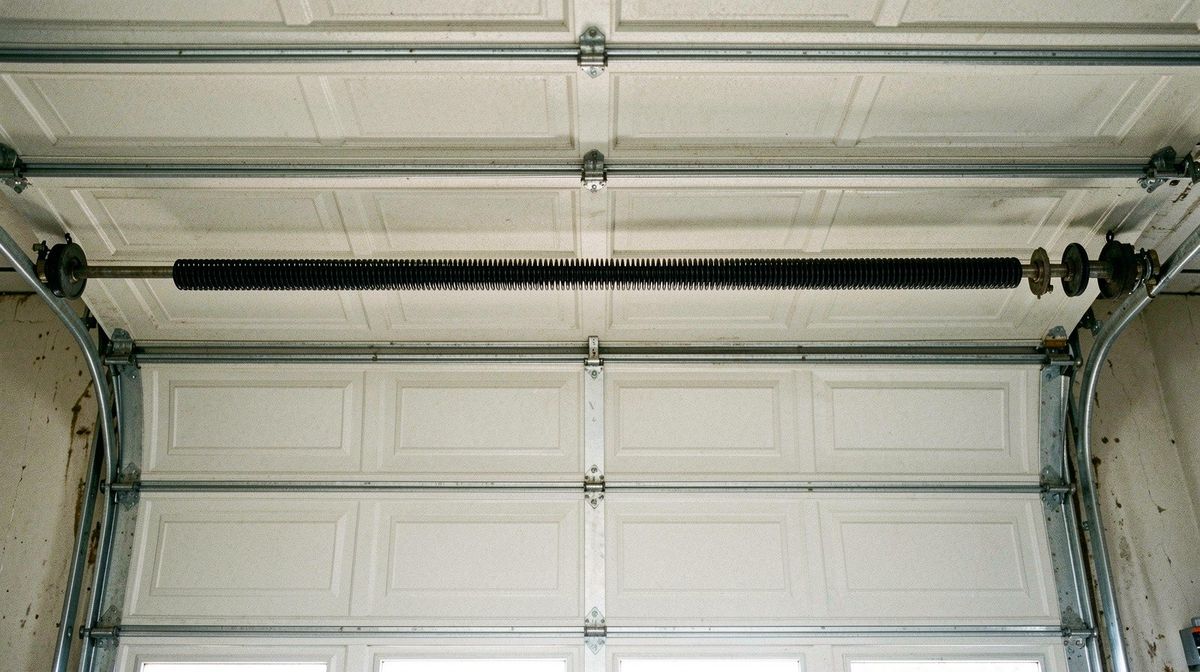
Garage door springs counterbalance the door's weight so it can be lifted by hand or by a small motor. Torsion springs sit on a bar above the door; extension springs run along the side tracks. Both store energy and can injure people when they break. Do not adjust, remove or replace springs or cables yourself. Hire a trained garage door technician.
Belongs to the guide: Garage Doors: Types, Materials, Sizes and Openers
Safety note. Background reading only. Treat it as no stand-in for your owner’s manual, the maker’s install sheet, your local building and fire code, or a licensed tradesperson. A garage can hold carbon monoxide, open flame, live circuits, wound springs and solvent fumes. The Garage Notes team checked each claim against the sources listed on this page; it holds no trade licence.
Springs do most of the lifting in a garage door system, and that is why a broken one is a hazard. This page supports our garage doors guide: it explains the two spring types and the warning signs. It does not teach spring replacement; that job needs a trained garage door technician. See also door problems and safe fixes.
What do garage door springs do?
Springs counterbalance the door’s weight. A balanced door stays where you leave it, and a small motor or your hand can lift it. When a spring fails, the door loses its counterbalance, and DASMA says openers are designed for doors that are properly balanced. CPSC warns that a severely unbalanced door could crash to the floor, possibly striking someone beneath it.
Torsion vs extension springs: how to tell which you have
Look at where the spring sits. This is a visual check from the floor; do not climb or touch.
- Torsion springs: one or two springs on a horizontal bar above the door opening, with cable drums at each end.
- Extension springs: springs running along the upper horizontal tracks on each side, stretching and contracting as the door moves.
Doors with extension springs need a safety cable running through each spring and anchored at both ends, which keeps a broken spring contained, according to DASMA. If you cannot see one, contact a door dealer for a safety inspection.
Signs a spring is worn or broken
- A loud bang from the garage.
- A visible gap in a torsion spring coil or a stretched, sagging extension spring.
- A door that feels heavy, will not stay partway open, or strains the opener.
- A frayed or loose cable.
DASMA says springs wear out and can injure when they break. For older doors, have a professional inspect them. It also says if a door has two springs, replace both, even if one is not broken.
Why spring and cable work is dangerous
DASMA says springs wear out and can cause injury when they break. It says the bottom brackets are under extreme tension and should be adjusted or loosened only by a trained door systems technician, and that only a trained technician should replace the cables. Many manufacturers now add tamper-resistant hardware to stop novices from loosening brackets.
Stop and hire a trained technician for: any spring replacement or adjustment, cable replacement, bottom-bracket work, or a door that is heavy or unbalanced.
What to do if a spring breaks
- Stay out from under the door and keep children and pets away.
- Do not lift or force the door.
- Do not run the opener against the door.
- If the door is stable and fully closed, leave it closed.
- Call a trained garage door technician.
- If a vehicle is trapped, ask the technician how to proceed.
Cold weather and spring wear
No source we opened quantifies how cold affects spring life, so we make no claim. A stiff, cold door can feel heavier and strain the opener, which can look like spring trouble; a technician can tell the difference. Clear ice from the sill and bottom seal.
Hiring a technician: questions to ask
- Will both springs be replaced?
- Which spring type and size will be used, and why?
- Are the cables, rollers and brackets inspected?
- What is the written warranty on parts and labor?
- Will the door be balanced and the opener’s reverse tested afterward?
- Is a written quote available before work begins?
Keep the invoice. Do not agree to a price you have not seen in writing.
What you can do safely
Check the cables and springs by eye each month from a safe distance. Look for fraying, gaps, rust and loose hardware. Use handles when operating the door by hand and never put fingers between sections. CPSC describes a balance check done with the door closed: pull the opener’s quick-release, then move the door up and down by its handle to see whether it stays put when stopped partway. Skip the check if you see a gap in a spring, a frayed or loose cable or a sagging door, and call a technician instead. If the door does not stay put, stop and call.
Related guides
Frequently asked questions
How do I know if my garage door spring is broken?
Typical signs are a loud bang from the garage, a visible gap in a torsion spring, a door that feels very heavy or will not stay open, or an opener that strains without lifting the door. Do not lift the door to test. Keep people clear, leave the door as it is, and call a trained technician.
Torsion or extension spring: which is safer?
Neither is safe to service yourself. Both store energy and can injure when they break. DASMA says doors with extension springs need a safety cable through each spring, anchored at both ends, to contain a broken spring. If you cannot see a cable running through them, ask a technician to inspect your door.
Can I replace a garage door spring myself?
We do not recommend it and give no steps. DASMA states spring systems are dangerous and should be repaired only by trained professionals, and that bottom brackets and cables are under high tension. Hire a trained garage door technician, and ask whether both springs will be replaced.
How long do garage door springs last?
Spring life is measured in cycles, and DASMA publishes a technical data sheet on factors that affect it, but we did not find a general number we can verify. Check your door's documentation for the spring's rated cycles, and have an older door's springs inspected by a trained technician.
Can I still use the opener with a broken spring?
No. The opener is not made to lift a door without the spring's help, and forcing it can damage the motor and drop the door. Stay clear, leave the door as it is and call a trained technician for repair.
Sources and further reading
- DASMA: Garage Door Systems Safety Tips (dasma.com)
- DASMA: Garage Door Safety Tips (dasma.com)
- CPSC: Non-Reversing Automatic Garage Door Openers Are a Hazard (Pub. 523) (cpsc.gov)
- DASMA: Technical Data Sheets index (dasma.com)
Related articles
- Garage Doors: Types, Materials, Sizes and Openers
Plain-English guide to garage doors: door types, materials, standard sizes, openers, what to inspect, and which spring and cable jobs need a technician.
- Garage Door Remotes: Types, Compatibility and Programming
How garage door opener remotes work, how to tell which remote fits your opener, how to program one from the owner's manual, and what to do when it stops.
- Garage Door Opener Not Working: Troubleshooting
Step-by-step checks when a garage door opener will not work: power, wall button, remote, manual release and safety sensors, plus when to call a technician.
- Common Garage Door Problems and Safe Fixes
Diagnose a garage door that will not open, sits crooked, shakes or is noisy: what you can check safely, what to leave alone, and when to call a pro.
- Standard Garage Door Sizes and Measuring
Standard single and double garage door widths and heights, how to measure width, height, headroom and side room, and when you need a custom size.