Garage Doors: Types, Materials, Sizes and Openers
Posted by MN Garage Notes Editorial Team Reviewer: MN Garage Notes Editorial Team Most recently reviewed Published In Garage doors
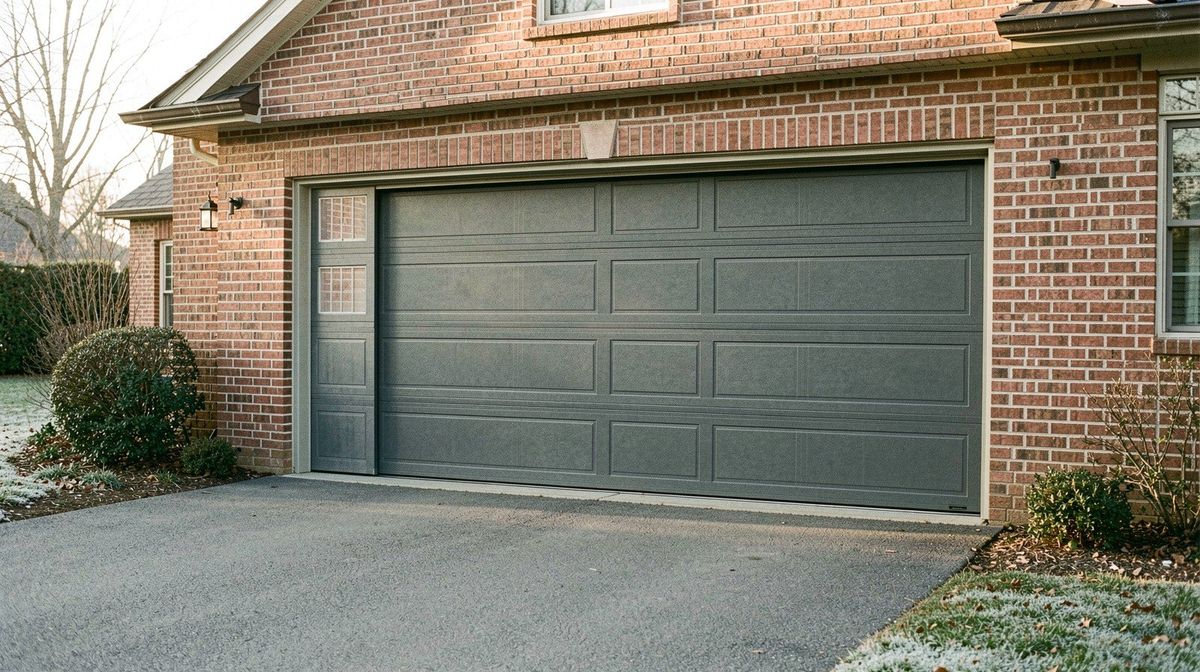
A garage door system is the door panels, tracks, springs and cables, and usually an automatic opener. Most homes have a sectional door that rolls up on tracks. Single doors are commonly 8 or 9 feet wide and double doors 16 or 18 feet, at 7 or 8 feet tall, per one distributor's guide. Springs and cables are under high tension and are work for a trained technician.
Safety note. Background reading only. Treat it as no stand-in for your owner’s manual, the maker’s install sheet, your local building and fire code, or a licensed tradesperson. A garage can hold carbon monoxide, open flame, live circuits, wound springs and solvent fumes. The Garage Notes team checked each claim against the sources listed on this page; it holds no trade licence.
A garage door is the largest moving part of most houses, and it connects to four things you should be able to name: the door panels, the tracks, the spring-and-cable counterbalance, and the opener. This guide is the hub for our garage door pages: sizes, opener remotes, what to check when the opener fails, common problems and spring types and safety.
What does a garage door system include?
A garage door system is the door itself, the tracks it rides in, a counterbalance of springs and cables, and, on most homes, an automatic opener. The springs carry most of the door’s weight, which is why a door that is working normally can be lifted by hand once the opener is detached. The opener only moves a door that is already balanced.
- Panels and hinges: hold the door’s shape and fold at the hinges as the door curves into the horizontal track.
- Tracks and rollers: guide the panels; bent or misaligned track is a common cause of binding.
- Springs and cables: store energy to offset the door’s weight. Treat them as high-tension parts.
- Opener: the motor unit, rail or jackshaft, wall control, remotes and safety sensors.
What types of garage doors are there?
Doors are classified by how they open: sectional, roll-up, side-hinged and tilt-up. A sectional door is the usual choice on attached garages.
What materials are garage doors made from?
Garage doors are commonly made of steel, wood, aluminum, fiberglass or composite. Each trades weight, upkeep, dent resistance and appearance differently, and none is rated best by any source we opened.
- Steel: common and low-maintenance; check the finish and corrosion warranty if road salt reaches the door.
- Wood and composite: a traditional look; wood needs finish upkeep in freeze-thaw weather.
- Aluminum and glass panel styles: light; check how the maker rates dent and wind resistance.
- Fiberglass: resists some corrosion; ask the maker about impact and UV performance.
Compare the manufacturer’s written warranty and technical sheet, not marketing terms. Do not rely on a retailer page for specifications.
Are insulated doors different?
An insulated garage door adds a layer between the outer and inner panel skins and normally improves fit at the seals. How much it matters depends on whether the garage is heated and attached to living space. Read our insulated garage doors guide or the door insulation guide for how R-value labels work; we do not quote energy savings without a dated source.
What are standard garage door sizes?
An Overhead Door distributor’s measuring guide lists single-car widths of 8 or 9 feet, double-car widths of 16 or 18 feet, and heights of 7 or 8 feet; we found no industry-association source, so treat these as common sizes. Headroom matters too: it depends on the track and spring system, and the door maker’s installation sheet gives the figure for your model. See garage door sizes and how to measure for the full measuring steps.
How do garage door openers fit in?
An opener is a motor that moves a door that is already balanced. Drive type (chain, belt, screw or direct) changes noise and upkeep, and a jackshaft style mounts beside the door. Before buying or fixing one, read the owner’s manual and check that the safety sensors and reversal work.
Openers made or imported for sale in the US after January 1, 1991 must have reversing systems, and external entrapment protection (an electric eye, door edge sensor or equivalent) has been required since 1993, per CPSC. The standard is 16 CFR Part 1211, which incorporates UL 325 by reference. Remote problems are covered in garage door opener remotes, and diagnosis in opener troubleshooting.
What can you maintain yourself?
You can do a monthly visual and safety check; you cannot safely service the spring system. CPSC and DASMA recommend inspecting the door and opener about every 30 days.
- With the door closed, pull the opener’s quick-release to disconnect it, then lift and lower the door by its handle. It should move smoothly and stay in place when left partly open. That is what “balanced” means; a door that does not stay put needs professional service. Skip this check and call a technician if a spring has a gap or a cable is frayed or loose.
- Look at cables, brackets and hardware for fraying, rust or loose bolts. Look only; do not loosen anything.
- Use handles or gripping points, never the gaps between sections, because fingers are pinched there.
- Test the opener’s reverse function with a 2x4 laid flat on the floor in the door’s path. If the door does not reverse when it strikes the board, disengage the opener until it is adjusted per the owner’s manual, repaired or replaced.
- Check that photo eyes are no higher than 6 inches above the floor, as DASMA advises.
Springs, cables and entrapment: when to stop
Stop and hire a trained garage door technician for any spring, cable or bottom-bracket work. DASMA states that spring systems are dangerous and should be repaired only by trained professionals, that cables and bottom brackets are under high tension, and that only a trained technician should adjust or replace them.
- Do not loosen, adjust or try to replace springs, cables or bottom brackets.
- Do not disable or bypass photo eyes or the auto-reverse feature.
- If a spring or cable breaks, do not lift the door. See garage door springs.
- If the door will not reverse on the 2x4 test, stop using the opener until it is serviced.
What drives the cost of replacing a door?
Replacement cost depends on size, material, insulation construction, hardware and labor, and we do not quote prices without a dated source. List your door’s width and height, ask for written quotes that name the spring type and warranty, and ask the installer to confirm headroom. A formula you can fill in: total = door price + opener (if replaced) + hardware + removal and disposal + labor.
Related guides
| Type | How it opens | Where it fits | Things to check |
|---|---|---|---|
| Sectional | Hinged panels roll up on side tracks and rest under the ceiling | Most attached garages | Headroom, spring type, weatherstripping |
| Roll-up (coiled) | Door coils around a drum above the opening | Tight headroom, some commercial-style garages | Opener compatibility, panel finish |
| Side-hinged | Two leaves swing outward like barn doors | Older or detached garages, carriage-house looks | Needs clear driveway space, wind and seal behavior |
| Tilt-up / canopy | One-piece slab pivots up and out | Older garages | Counterbalance hardware, outward swing path |
For a typical attached garage, a sectional door is the usual choice because it needs the least driveway clearance and works with standard openers. Choose another type only for headroom, style or an existing-building reason, and confirm fit with the door manufacturer's specification.
All Doors guides
- Common Garage Door Problems and Safe Fixes
Diagnose a garage door that will not open, sits crooked, shakes or is noisy: what you can check safely, what to leave alone, and when to call a pro.
- Garage Door Opener Not Working: Troubleshooting
Step-by-step checks when a garage door opener will not work: power, wall button, remote, manual release and safety sensors, plus when to call a technician.
- Garage Door Remotes: Types, Compatibility and Programming
How garage door opener remotes work, how to tell which remote fits your opener, how to program one from the owner's manual, and what to do when it stops.
- Garage Door Springs: Torsion vs Extension and Safety
What garage door torsion and extension springs do, how to spot a worn or broken one, and why spring and cable work is for a trained technician only.
- Standard Garage Door Sizes and Measuring
Standard single and double garage door widths and heights, how to measure width, height, headroom and side room, and when you need a custom size.
Frequently asked questions
What are the main types of garage doors?
Garage doors are grouped by how they open. Sectional doors roll up on tracks and are the most common on attached garages. Roll-up (coiled) doors wind around a drum, side-hinged doors swing outward like barn doors, and tilt-up canopy doors pivot as one slab. The right type depends on headroom, driveway space and the opener you plan to use.
Which garage door material lasts longest in a cold climate?
No source we opened ranks materials by lifespan, so this page does not name a winner. In cold, salty climates, compare steel, wood, aluminum, fiberglass and composite on the maker's written warranty terms, finish type, and weatherseal design, and ask for the door's published thermal rating. A warranty that covers corrosion and delamination is more useful than a general claim.
Are insulated garage doors worth it?
It depends on whether the garage is attached, heated or used as a workshop. Insulated doors add layers between the panel skins and usually fit better weatherstripping, which may cut drafts and noise. We do not quote savings here. Our door insulation guide explains the R-value labels to compare and how to weigh a kit against a factory-insulated door.
What are standard garage door sizes?
One Overhead Door distributor's guide lists single-car widths of 8 or 9 feet and double-car widths of 16 or 18 feet, with heights of 7 or 8 feet. Custom sizes exist for unusual openings. Always measure your own opening and headroom before ordering, because track and spring hardware need clear space around the door.
How long does a garage door last?
No single lifespan applies. Panels, weatherseals and finishes age with weather and use, while springs wear by cycles; DASMA publishes a technical data sheet on factors affecting spring cycle life. Look at your door's warranty and inspect it monthly. Springs on older doors should be inspected by a trained technician and replaced if needed.
Can I replace a garage door myself?
The panels and track are heavy and the springs and cables are under extreme tension, so we do not recommend a first-time DIY install. DASMA says cables should be replaced only by a trained technician, and that bottom brackets should be adjusted or loosened only by one. If you want to be involved, decide on the door and openers, then hire a trained door technician for installation.
Sources and further reading
- CPSC: Non-Reversing Automatic Garage Door Openers Are a Hazard (Pub. 523) (cpsc.gov)
- 16 CFR Part 1211: Safety Standard for Automatic Residential Garage Door Operators (Cornell LII) (law.cornell.edu)
- 16 CFR Part 1211 on eCFR: effective date and incorporated standards (ecfr.gov)
- DASMA: Garage Door Safety Tips (dasma.com)
- DASMA: Garage Door Systems Safety Tips (dasma.com)
- DASMA: Garage Door Opener Safety Tips (dasma.com)
- DASMA: Technical Data Sheets index (dasma.com)
- Overhead Door distributor guide: How to Measure for a Garage Door (sizes only; no official source found) (overheaddoors.com)
Related articles
- Garage Door Remotes: Types, Compatibility and Programming
How garage door opener remotes work, how to tell which remote fits your opener, how to program one from the owner's manual, and what to do when it stops.
- Garage Door Opener Not Working: Troubleshooting
Step-by-step checks when a garage door opener will not work: power, wall button, remote, manual release and safety sensors, plus when to call a technician.
- Common Garage Door Problems and Safe Fixes
Diagnose a garage door that will not open, sits crooked, shakes or is noisy: what you can check safely, what to leave alone, and when to call a pro.
- Standard Garage Door Sizes and Measuring
Standard single and double garage door widths and heights, how to measure width, height, headroom and side room, and when you need a custom size.
- Garage Door Springs: Torsion vs Extension and Safety
What garage door torsion and extension springs do, how to spot a worn or broken one, and why spring and cable work is for a trained technician only.