Garage Workshop Setup: Layout, Power and Heat
Posted by MN Garage Notes Editorial Team Reviewer: MN Garage Notes Editorial Team Most recently reviewed Published In Organization
A garage workshop for woodworking or other hobby work needs four things planned before the first tool: a layout that keeps the bench, tool wall and walkways clear, safe power with grounded, undamaged cords, a way to keep warm that does not create carbon monoxide or fire risk, and careful storage of flammables. Hire a licensed electrician for new circuits.
Belongs to the guide: Garage Organization: Ideas, Zones and Storage Systems
Background reading only. Treat it as no stand-in for your owner’s manual, the maker’s install sheet, your local building and fire code, or a licensed tradesperson. A garage can hold carbon monoxide, open flame, live circuits, wound springs and solvent fumes. The Garage Notes team checked each claim against the sources listed on this page; it holds no trade licence.
A garage workshop turns a parking space into a place to build. This page covers hobby woodworking and general DIY, not metal fabrication or any shop business. It is part of our garage organization guide, and it leans on the tool organization and wall organizer pages for storage.
Plan the use first
List what you will actually build: furniture, repairs, models, projects. The list decides bench size, power need, noise, dust and whether you need heat. Welding and plasma cutting are a separate topic with their own hazards and are not covered here.
Zones and workflow
Arrange the shop in the order work flows: store raw material, cut or prepare, assemble, finish, then store the result.
- Bench zone. Put the main bench where light and power are best.
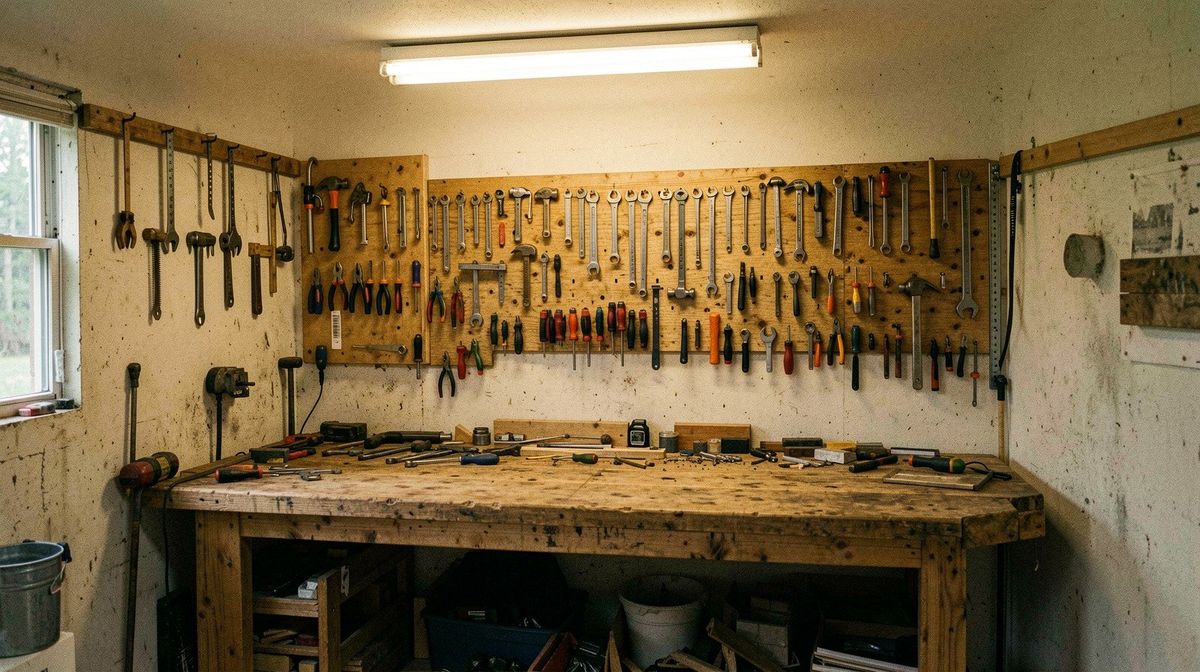
- Tool wall. Keep daily tools within a step of the bench.
- Material zone. Store long stock on an overhead or wall rack rated for it; follow the rack’s load rating.
- Finishing zone. Keep finishes and solvents in a closed, ventilated place away from heat.
- Clear aisles. Leave room around every machine and the exit.
Electrical: power and cords
New circuits, panels and permanent wiring are a licensed electrician’s job, and your local building department sets the code that applies. This site did not open the electrical code text, so we state no outlet counts.
For cords and tools, CPSC’s power tool checklist says:
- Read and follow the owner’s manual.
- Wear safety goggles against flying debris.
- Keep cords undamaged. CPSC makes the grounded-receptacle point for extension cords used outdoors, so check the tool manual for what indoor use needs.
- Keep cords away from heat, oil and sharp edges, and never carry a tool by its cord.
- Avoid corded tools in damp or wet conditions.
Winter melt can leave a garage floor wet, so check the floor before you plug in.
Heat and insulation for a cold shop
Warm the shop in the right order: seal air leaks, insulate, then add heat. Insulation targets differ by climate zone; ENERGY STAR’s 2021-IECC-based table for retrofitting existing homes lists R60 for adding insulation to an uninsulated attic floor in zones 4 to 8 as one example. See garage insulation and the notes on insulating the ceiling.
Heaters bring their own hazards. Follow the heater’s manual and local code, use a licensed professional for gas, propane, venting and hardwired electrical work, and never use a fuel-burning heater where its manual does not allow it. Read garage heaters and heater fire and CO risks first. Never store fuel or finishes near a heater.
Floors and standing comfort
A hard garage floor is tiring to stand on and can be wet in winter. Anti-fatigue mats at the bench help, and mats keep cords and tools out of puddles. For coatings and floor systems, see coatings, tiles and mats.
Safety: fire, fumes, dust and flammables
- Flammable storage. CPSC says never to store gas cans near sources of ignition such as fuel-burning appliances, open flames, pilot lights or heaters. EPA’s transfer-station guide says to store flammables separately from other chemicals, ideally in a flammable storage cabinet.
- Waste. EPA lists paints, solvents and batteries as household hazardous waste; use a local collection program.
- Fumes and dust. Follow the safety data sheet for finishes and the tool manual for dust. Ventilate when finishing.
- Fire extinguisher and alarms. Ask your local fire department what they advise for a garage workshop; this site did not open a source with a rule.
A phased budget plan
- Phase one. Clear, light and safe power from a licensed electrician; a bench and a tool wall.
- Phase two. Insulate and seal; add safe heat.
- Phase three. Floor comfort and dust control as your work needs.
- Phase four. Machines, bought only when the work asks for them.
Price each phase from current local quotes. See our editorial policy for why we print no prices without a dated source.
Frequently asked questions
How do I set up a workshop in a two car garage?
Decide what you will build, then split the space: parking if you still need it, a bench zone, a tool wall and a storage zone. Keep walkways clear around machines, put the bench near light and power, and keep fuel and finishes in a closed cabinet away from heat. Add heat and insulation before you invest in machines.
How many outlets does a garage workshop need?
There is no number we can source, and code rules vary by location. Plan outlets along the bench and wall so you never need a long extension cord, and have a licensed electrician add or change circuits. CPSC advises avoiding corded tools in damp or wet conditions.
What lighting does a workshop need?
We have no sourced light-level figure, so we do not state one. Put bright, even light over the bench and tool areas, and avoid shadows on cutting lines. Ask a licensed electrician about fixtures rated for a garage, and check each fixture's manual for insulation clearance and any cold-temperature rating.
How do I heat a garage workshop?
Insulate and air-seal first, then choose a heater whose manual and local code allow it for a garage. Fuel-burning heaters raise carbon monoxide and fire risks, so follow the manual and use a licensed professional for gas, propane, venting and wiring. Read our heater guide and heater safety page, and never use an outdoor-only heater indoors.
Do I need a dust collector?
We did not open a source with a dust-collection rule, so we do not state one. Dust from sanding and sawing is a fire and breathing concern, so wear the respiratory protection the tool or material manual calls for, and clean up regularly. Follow the manuals for your tools and the safety data sheet for any finish.
Sources and further reading
Related articles
- Garage Organization: Ideas, Zones and Storage Systems
Organize a cold-climate garage by zones: plan and purge, choose a wall system, and store fuel and chemicals away from heaters, with sources cited.
- Garage Tool Organization: Cabinets, Chests and Pegboards
Organize garage tools by how often you use them: wall boards, chests and cabinets compared, plus cold-weather battery storage and locking up sharp tools.
- Garage Wall Organizers: Rails, Slatwall and Pegboard
Compare garage wall organizer types, how to read load ratings, how to mount into framing, and what cold and road salt do to metal hooks and rails.