Garage Tool Organization: Cabinets, Chests and Pegboards
Posted by MN Garage Notes Editorial Team Published In Organization
Garage tool organization works best when you sort tools by how often and for what task you use them, then match each group to a wall board, chest or cabinet. Keep daily tools within reach, lock away sharp tools and chemicals where children are present, and check each battery and tool manual for its storage temperature before leaving it in a cold garage.
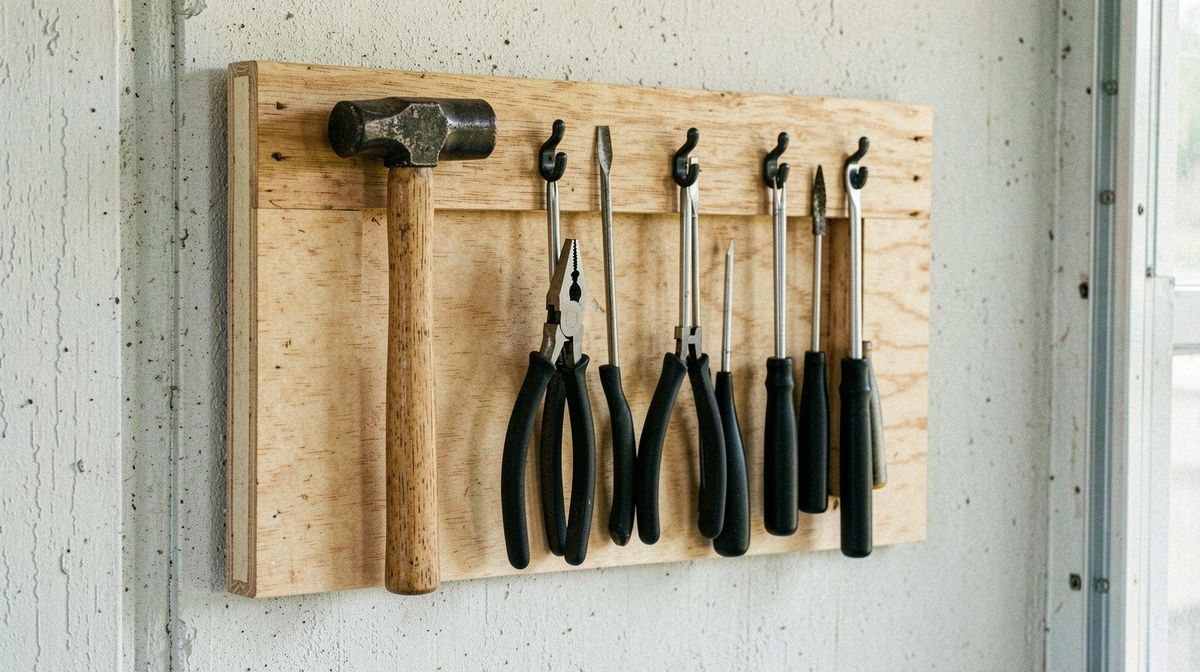
Belongs to the guide: Garage Organization: Ideas, Zones and Storage Systems
Garage tool organization is about finding a tool in seconds and putting it back just as fast. It covers one zone of the plan in our garage organization guide. This page covers sorting, the three main storage types, and the cold-weather and safety questions that come with tools in an unheated or lightly heated garage.
Sort by frequency and task
Pull every tool out and sort twice. First by task: fastening, measuring, cutting, electrical, car care, yard. Then by frequency: daily, monthly, yearly. Daily tools go within arm’s reach of your bench. Yearly tools go high or back. Duplicate tools you never use can leave.
Wall, chest and cabinet compared
| Option | Best for | Trade-off |
|---|---|---|
| Wall board or rails | Hand tools you use often | Open to dust and children; see wall storage systems |
| Rolling chest | Power tools, drawers of small parts | Takes floor space; check the maker’s load rating |
| Closed cabinet | Locked tools, chemicals, batteries | Weight when full; needs wall or floor space |
A combination is common: a board for the daily set, a chest for the rest, and a cabinet for anything that must be locked.
Power tools and batteries in cold weather
Read the manual for each tool and battery. Makers set storage and charging temperature limits, and they differ, so we do not give one number. If the garage falls below the stated range, bring batteries indoors. EPA lists batteries as household hazardous waste, so do not put worn-out ones in the trash; use a local collection program.
CPSC’s power tool checklist adds three habits worth building into the layout:
- Read and follow the owner’s manual.
- Keep cords away from heat, oil and sharp edges, and never carry a tool by its cord.
- Avoid corded tools in damp or wet conditions. Wet garage floors in winter count.
Sharp and hazardous tools: locking and kids
Lock up blades, saws and chemicals if children or visitors use the garage. CPSC says to keep gas cans and other portable fuel containers out of the reach of children; apply the same rule to anything that can cut or poison. Do not store fuel near the tool bench if a heater is nearby, since CPSC says never to store gas cans near ignition sources such as heaters or pilot lights. See garage heater safety.
Layout examples
The sizes below are starting points, not standards.
- 6 by 8 ft zone: Board on the long wall, one rolling chest below or beside it, a shelf above for yearly tools, and one lockable cabinet at the end.
- 10 by 12 ft zone: Add a fixed bench along the back wall with a board above, a chest under the bench, and a second wall for power tool storage. A shop-style setup is covered in the workshop setup guide.
Leave a clear walking path and keep the floor clear for parking. If you plan to coat the floor, see garage flooring.
Frequently asked questions
How do I organize tools in a garage?
Sort tools by task and frequency, then give each group a place. Put everyday hand tools on a wall board or in a top drawer, power tools in a chest or cabinet, and rarely used items on high or back shelves. Label drawers, keep sharp tools locked up if children are around, and return each tool to its spot.
Do tool batteries get damaged in cold?
Each maker sets its own storage and charging temperature limits, so we do not state a number. Check the battery and charger manual, and bring batteries indoors if the garage falls below the stated storage range. Do not charge a battery outside the range the manual allows. When a battery reaches end of life, treat it as household hazardous waste.
Should I use a chest, a cabinet or a wall board?
Use a wall board for tools you grab often and want to see, a chest for mid-size power tools and parts that need drawers, and a closed cabinet for tools or chemicals you want to lock away. Many garages use all three. Check floor and wall load ratings from the maker before loading anything heavy.
How do I keep tools from rusting in a cold garage?
Keep them dry and off damp floors, wipe off road salt and melt water, and store them in closed drawers or cabinets rather than open air. CPSC advises avoiding corded power tools in damp or wet conditions, which also applies to a wet garage floor. Follow the tool maker's care instructions for oils or coatings.
How should I store sharp tools around children?
Lock them in a cabinet or a drawer with a latch, or hang them above reach and out of sight. Keep blades covered or in their cases, and keep chemicals and fuel in separate locked or high storage. CPSC says to keep gas cans and portable fuel containers out of the reach of children, and the same habit applies to blades.
Sources and further reading
Related articles
- Garage Organization: Ideas, Zones and Storage Systems
Organize a cold-climate garage by zones: plan and purge, choose a wall system, and store fuel and chemicals away from heaters, with sources cited.
- Garage Wall Organizers: Rails, Slatwall and Pegboard
Compare garage wall organizer types, how to read load ratings, how to mount into framing, and what cold and road salt do to metal hooks and rails.
- Garage Workshop Setup: Layout, Power and Heat
Plan a hobby garage workshop for a cold climate: zones and workflow, safe power and cords, heat and insulation, and flammable storage, with sources cited.